

Can a well-crafted digital product be the key to unlocking new business opportunities?
In today’s fast-paced digital landscape, creating a successful product is complex. It involves many stages, from the first idea to managing it after launch. Each step needs careful planning and action.
The journey of digital product development requires understanding the market, your audience, and trends. This guide will cover the main stages, tools, and strategies for making top-notch digital products.
Understanding Digital Products
In today’s world, knowing about digital products is key. These are things you can’t hold in your hand but can access online. They bring many benefits.
What Are Digital Products?
Digital products are things like PDFs, eBooks, podcasts, and online courses. They live only in the digital world. You can get them and use them through the internet.
Key characteristics of digital products include:
- Intangibility: They can’t be touched or held.
- Electronic access: You need a device to use them.
- Scalability: They’re easy to make and share without extra cost.
Types of Digital Products
There are many kinds of digital products. They meet different needs and tastes. Here are some examples:
- eBooks and digital publications
- Online courses and educational resources
- Digital art and graphics
- Software and applications
- Podcasts and audio content
Each digital product has its own benefits and audience. For example, online courses help with learning. Digital art is great for creative projects.
Advantages of Digital Products
Digital products have many perks. They cost less to make, grow easily, and reach more people. Creators can also earn money without much work.
The advantages of digital products are:
| Advantage | Description | Benefit |
|---|---|---|
| Lower Production Costs | No need for physical materials or storage | Reduced expenses |
| Increased Scalability | Easy reproduction and distribution | Increased reach and sales |
| Wider Audience Reach | Global distribution through digital platforms | More customers and revenue |
By understanding digital products, businesses and people can do well online.
Market Research for Digital Products
To make a hit digital product, start with solid market research. This means knowing your audience, checking out your rivals, and keeping up with new digital trends.
Identifying Your Target Audience
Finding out who your target audience is is key. You need to know their demographics, likes, and habits.
- Do surveys and interviews to get real info.
- Use analytics tools to see how users act on your site or app.
- Look at social media to spot trends and likes.
Analyzing Competitors
Competitor analysis helps you see where you fit in the market. It’s about looking at what your rivals do well and what they don’t, and their plans.
| Competitor | Strengths | Weaknesses |
|---|---|---|
| Competitor A | Strong brand, wide reach | Not online much, pricey |
| Competitor B | New products, big online presence | Bad customer service, lots of competition |
Trends in Digital Product Offerings
Keeping up with digital product trends is vital. Watch industry reports, go to conferences, and talk to experts.
Good market research lets you make a product that fits your audience, beats the competition, and follows the latest trends.
Planning Your Digital Product
To make a successful digital product, you need a solid plan. Planning involves several important steps. These steps help your product succeed in the market.
Setting Goals and Objectives
Setting clear goals and objectives is key. You must define what you aim to achieve. Understand your audience’s needs and what will measure your success.
Think about these when setting your goals:
- What problem does your digital product solve?
- Who is your target audience?
- What are the main features and functionalities of your product?
Creating a Product Roadmap
A product roadmap outlines your product’s vision and direction. It guides the development team and stakeholders. It ensures everyone is on the same page with your product’s goals.
A good product roadmap should have:
- Short-term and long-term goals for the product
- Key milestones and timelines
- Prioritization of features and functionalities
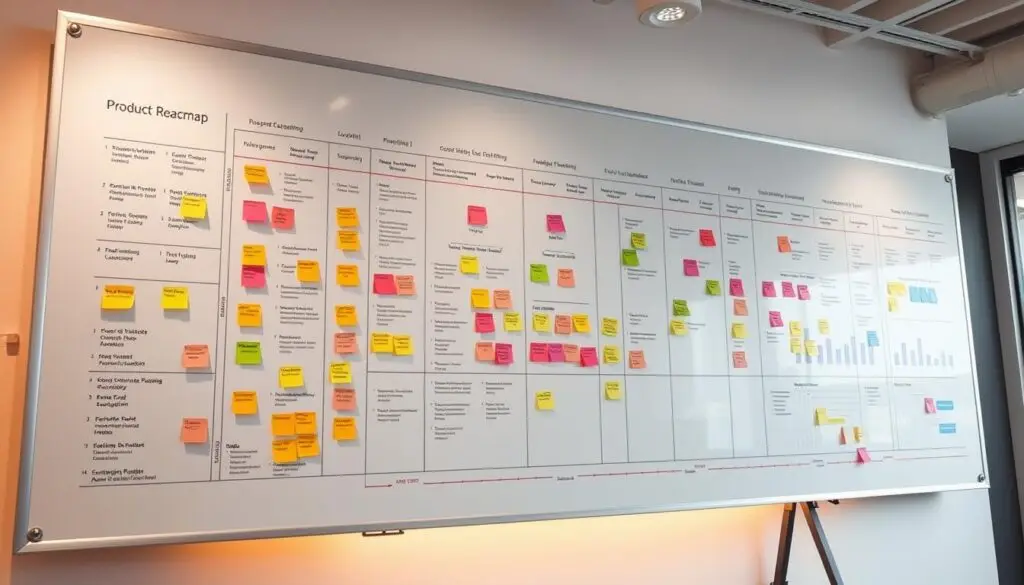
By following these steps and making a detailed plan, your digital product will meet your audience’s needs. It will also reach your business goals.
Design and Development Process
Making a digital product needs careful design and development process. This stage is key to making your product idea real. It also makes sure it fits what your audience wants.
Choosing the Right Tools
The first thing is picking the right tools and tech. This choice affects how well your product works, how easy it is to use, and if it can grow. Tools like Sketch and Figma help with design. For coding, React and Angular are popular choices.
Think about your team’s skills, how complex your product is, and if you’ll need to update it later. Also, pick tools that help your team work together better and make things easier.
User Experience (UX) Design Principles
A good user experience is key for a digital product’s success. UX design aims to make the product easy, fun, and user-friendly. Important parts include being simple, consistent, and giving clear feedback.
- Simplicity means making the product easy to use and understand.
- Consistency means the design and how it works stay the same everywhere.
- Feedback helps users know what they’re doing and how the product responds.
Developing Content and Features
Creating content and features is a big part of making a digital product. Content should grab attention, teach, and match what the audience likes. Features should meet what users need and want.
Think about what your product aims to do when making content and features. It’s also important to focus on the most important features first. A good plan for content and features can make your product better and more successful.
Testing Your Digital Product
The success of your digital product depends on thorough testing. It’s not just about finding bugs. It’s about making sure your product works well and feels right to your audience.
Importance of User Testing
User testing is key in making a digital product. It lets you see how real users interact with your product. You can spot any problems or missing features. This feedback is super valuable for making your product better and happier users.
Some big benefits of user testing are:
- Spotting usability problems early
- Learning what users like and don’t like
- Checking if your product’s features work as planned
- Improving how users feel about your product
Feedback Collection Methods
Getting feedback is a big part of testing. There are many ways to collect user feedback, like:
- Surveys and questionnaires: These help you get both kinds of data from users.
- User interviews: These give you deep insights into what users think and feel about your product.
- Usability testing sessions: Watching users use your product shows a lot about its usability.
- Beta testing: Testing a beta version with a small group can find problems before you launch.
Analyzing Test Results
After you get feedback, you need to look at the results. This means finding patterns, sorting issues by how big they are, and deciding what changes to make.
Some important steps in looking at test results are:
- Sorting feedback into different types (like usability problems or new feature ideas)
- Deciding which issues to fix first based on how they affect users and your goals
- Creating a plan for fixing problems and making your product better
Pricing Strategies for Digital Products
Setting the right price for digital products is key. It makes sure the product stands out in the market and brings in profits. The price affects how customers see the product, whether they buy it, and how much money it makes.

Understanding Value-Based Pricing
Value-based pricing sets the price based on what customers get from the product. It’s about knowing your audience well. This means understanding their needs, likes, and how much they’re willing to pay. By matching the price with the value, businesses can get a fair share of what they offer.
Key considerations for value-based pricing include:
- Identifying the unique benefits and features of the digital product
- Understanding the customer’s pain points and how the product addresses them
- Analyzing customer segments and their sensitivity to price
Competitor Pricing Analysis
Looking at what similar products cost is important. It helps see where your product fits in the market. Knowing how your product is different and if it’s worth more can guide your pricing.
Steps to conduct competitor pricing analysis:
- Identify direct competitors offering similar digital products
- Gather data on their pricing models and strategies
- Analyze the features, quality, and benefits of competing products
Discounts and Promotions
Discounts and promotions can boost sales and market share. But, they should not hurt the product’s value or profits in the long run. It’s all about finding the right balance.
Effective use of discounts and promotions involves:
- Defining clear objectives for the discount or promotion
- Choosing the right timing and duration
- Communicating the value of the offer to the target audience
By thinking through these strategies, businesses can price their digital products right. This helps reach goals and increase revenue.
Marketing Your Digital Product
Marketing your digital product needs a solid plan to reach your audience. A good marketing strategy boosts visibility, sales, and customer growth.
Building a Marketing Plan
A marketing plan is your guide for marketing. It outlines goals, target audience, and promotion strategies. Start by defining your unique selling point and knowing your competitors.
Choose the best marketing channels for your product, like email, social media, or ads. Set clear goals to measure success, like conversion rates and ROI.
Content Marketing Strategies
Content marketing draws in and keeps your audience. Create top-notch content like blog posts, videos, and infographics.
Use SEO techniques to make your content search-friendly. This boosts visibility and organic traffic. Try different content formats to reach more people.
Utilizing Social Media and Influencers
Social media marketing and influencer marketing boost your reach. Find where your audience hangs out online and be there.
Post regularly, engage with followers, and run targeted ads. Work with influencers to reach more people and build trust.
With these strategies, you can promote your digital product well and meet your business goals.
Launching Your Digital Product
The launch phase of a digital product is key. It determines how well the product will do in the market. A good launch needs careful planning, smart marketing, and knowing what to do after it’s launched.
Creating a Launch Timeline
A detailed launch timeline is vital. It helps organize all the steps before your product hits the market. This includes finishing the product, starting marketing, and testing before launch.
- Find out what tasks must be done before launch.
- Make sure each team member knows their job.
- Set deadlines that are achievable for each step.
Building Anticipation
Building anticipation is crucial for a great launch. You can do this with marketing before the launch. This creates excitement for your product.
- Use social media to hint at your product and share news.
- Give special previews or early access to loyal fans or subscribers.
- Use email marketing to build excitement and get people to sign up for launch alerts.
Post-Launch Activities
After launching, you need a plan for post-launch activities. This includes watching customer feedback, looking at sales, and tweaking the product and marketing as needed.
- Listen to customer feedback to see how you can get better.
- Keep an eye on important numbers like sales and how much it costs to get customers.
- Change your marketing based on what you learn after launch.
By focusing on these areas, you can make sure your digital product launches well. This sets you up for success in the long run.
Evaluating Success and Iteration
Checking how well your digital product does is key to its success. You need to track its performance, listen to user feedback, and make smart changes based on data.
Performance Metrics
To see how your product is doing, watch key numbers like sales and how much it costs to get new customers. Also, look at how users interact with your product. These numbers tell you what’s working and what needs work.
User Insights
It’s important to hear what your users have to say. You can do this with surveys, testing, and analytics tools. This way, you learn what they like and what they don’t, helping you make your product better.
Iterating for Success
Keeping your product fresh and improving it is crucial. By making changes based on what users say and how your product performs, you can grow and keep your customers happy. This way, you stay ahead in the market.