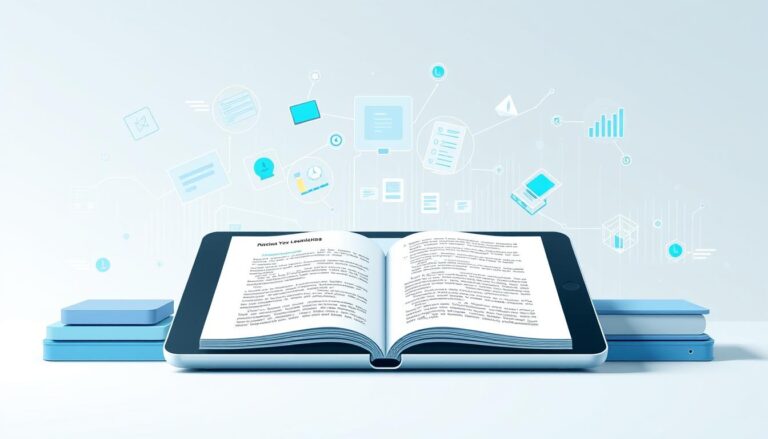

Are digital textbooks changing how we learn, or do printed books still lead to success in school?
The fight between McGraw-Hill Education ebooks and printed books is big in today’s schools.
Deciding on the best way to get school materials is key. It affects how well students learn and remember. It’s important to look at the good and bad of each choice.
This article will look at the differences between ebooks and printed books. We’ll see how they affect learning.
Overview of McGraw-Hill Education Products
McGraw-Hill Education has been around for over a hundred years. It has made big contributions to education. The company has always kept up with new technology, staying ahead in education.
History and Evolution of McGraw-Hill
Started in 1888 by James H. McGraw and John A. Hill, McGraw-Hill began with new ways to publish books. Over time, it has grown, using new tech to improve learning materials.
Key milestones in McGraw-Hill’s history include:
- Early adoption of digital content delivery
- Expansion into international markets
- Development of customized educational materials
Current Offerings in Ebooks and Print
Now, McGraw-Hill Education has many educational products in both digital and print. Their ebook offerings offer interactive and easy-to-access content. Their print materials are still popular in schools.
| Format | Features | Benefits |
|---|---|---|
| Ebooks | Interactive content, accessibility | Enhanced engagement, convenience |
| Tactile experience, no dependency on technology | Better retention, accessibility without devices |
The Role of Technology in Education
Technology has changed education a lot, and McGraw-Hill has led this change. They’ve made learning better by adding tech to their products. This makes learning more fun and effective.
Technology lets McGraw-Hill offer personalized learning experiences. This meets the different needs of students. As tech gets better, McGraw-Hill keeps working to improve learning.
Benefits of Ebooks for Learning
McGraw-Hill Education’s ebooks are changing how students learn. They make learning easy and fun. These digital books have special features that help students learn better.
Accessibility and Convenience
Ebooks let students study from anywhere, anytime. They just need a device with internet. This is great for students who are always on the move.
Key benefits of ebook accessibility include:
- Access to content from any device with an internet connection
- Ability to study anywhere, whether at home, in the library, or during commutes
- 24/7 availability, allowing students to learn at their own pace
Interactive Features Enhancing Engagement
Ebooks from McGraw-Hill Education are more than just books. They have cool features that make learning fun. Students can listen to the text, highlight important parts, and more.
Some of the interactive features include:
- Read-aloud functionality to assist with comprehension and auditory learning
- Annotation and highlighting tools for active engagement with the material
- Multimedia content, such as videos and interactive simulations, to illustrate complex concepts
Cost-Effectiveness Compared to Print
Ebooks are cheaper than printed books. They save money and space. Students can buy many ebooks without needing a lot of room.
Cost benefits of ebooks:
- Generally lower purchase or rental prices compared to printed textbooks
- No additional costs for shipping or storage
- Environmentally friendly by reducing the demand for paper and ink
Advantages of Printed Books
Ebooks have many benefits, but printed books from McGraw-Hill Education offer a special learning experience. They have been a key part of education for centuries. Printed books are loved for their many advantages.
Tangible Learning Experience
Printed books give a tangible learning experience. Students can touch and interact with the material. This makes learning more engaging and personal.
Focus and Retention in Physical Reading
Studies show printed books help with understanding and remembering, especially for long texts. The act of turning pages and avoiding digital distractions helps students focus better.

No Dependence on Technology
Printed books are great because they don’t need technology. They can be used anywhere, anytime. No batteries or internet are needed.
| Feature | Printed Books | Ebooks |
|---|---|---|
| Tactile Experience | Offers a tangible experience with page turning | Lacks physical interaction |
| Distractions | Minimal distractions, focused reading | Potential for digital distractions |
| Accessibility | No need for technology or internet | Requires a device and potentially internet |
In summary, printed books are valuable for students. They offer a real experience, improve focus and retention, and don’t need technology. This makes them a great choice for McGraw-Hill Education materials.
Comparative Analysis of Learning Outcomes
Research on ebooks and printed books shows mixed results. This highlights the challenge of measuring learning success across different formats.
Studies on Performance Using Ebooks
Studies on ebooks have found some interesting points. Ebooks are flexible and accessible, which helps students with different needs. They can be updated easily and include features like hyperlinks and multimedia.
But, some research warns that the digital world can be distracting. This might hurt how well students understand and remember what they learn. The impact of ebooks on learning is still a topic of debate.
Research on Printed Book Effectiveness
Printed books have long been a key part of education. They are linked to better retention and understanding. This is because they offer a hands-on experience that some find more engaging.
Research shows that the physical act of turning pages helps focus. The sensory experience of print also boosts memory recall. This can lead to better learning results.
Student Preferences and Findings
What students prefer affects how well ebooks or printed books work. Students like ebooks for their convenience and portability. But, others prefer the feel of printed books.
- Ebooks are great for carrying many texts in one place, making them lighter.
- Printed books are loved for their lack of digital distractions and the chance to write notes by hand.
In the end, whether ebooks or printed books are better depends on the learner. Knowing what students prefer helps educators and publishers, like McGraw-Hill, create better learning materials.
User Experience: Ebooks vs. Printed Books
Ebooks and printed books give different learning experiences. They cater to different learning styles. The user experience includes how easy it is to navigate, the design, and how portable they are.
Navigational Features of Ebooks
Ebooks have cool features like hyperlinks to extra content, bookmarking, and search functions. These make learning easier and more personal. Students can quickly find what they need and focus on important parts.
Design and Aesthetic Aspects of Print
Printed books offer a hands-on experience that many students love. The design and aesthetic aspects of printed books help keep students engaged. The feel of paper and ink makes learning more fun and real.
Portability and Usability
Ebooks are super easy to carry, letting students bring many books on one device. This saves space and weight. Printed books, though heavier, don’t need batteries or worry about glare.
| Feature | Ebooks | Printed Books |
|---|---|---|
| Navigational Features | Hyperlinks, bookmarking, search functions | Table of contents, index |
| Design and Aesthetics | Customizable font sizes, night mode | Tactile experience, visual appeal of print |
| Portability | Highly portable, multiple texts on one device | Physical burden, weight |
In conclusion, ebooks and printed books have different benefits. They suit different learning styles and preferences. Knowing these differences helps in choosing the right educational materials.
The Role of McGraw-Hill in the Education Sector
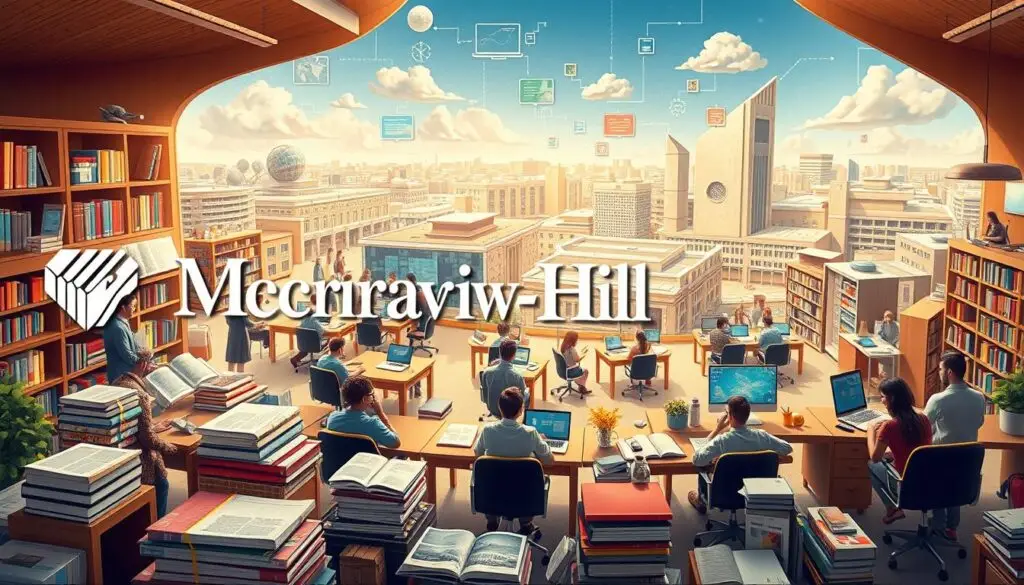
McGraw-Hill is a top name in education, helping shape learning outcomes in many ways. It leads in educational innovation, offering a wide range of products and services. These meet the varied needs of learners.
Partnerships with Educational Institutions
McGraw-Hill teams up with schools to improve learning. These partnerships help create educational materials that fit the needs of students and teachers. By working with schools, McGraw-Hill makes sure its products are useful and fit into the curriculum.
Key aspects of these partnerships include:
- Collaborative development of educational content
- Integration of McGraw-Hill’s products into institutional curricula
- Training and support for educators
Adapting to Modern Learning Trends
McGraw-Hill is all in on digital learning, keeping up with today’s trends. It invests in tech and new educational tools. This makes learning more fun and easy to get into.
The company’s move to modern trends is marked by:
- Development of interactive digital content
- Incorporation of emerging technologies in education
- Flexible pricing models to accommodate different learning needs
Reviews and Feedback from Users
What users say is key to knowing if McGraw-Hill’s stuff works. The company looks for reviews and feedback from students and teachers. This helps find ways to get better and shape future products.
User feedback sheds light on what’s good and what needs work with McGraw-Hill’s offerings. It gives insights into:
- User experience and satisfaction
- Areas for improvement in product design and functionality
- Impact on learning outcomes
Environmental Impact Considerations
Educational resources like McGraw-Hill Education Ebooks and printed books have big environmental effects. The move to digital learning materials has raised questions about ebooks’ greenness compared to printed books.
Sustainability of Ebooks
Ebooks are seen as greener because they don’t need paper, ink, or shipping. This cuts down on carbon emissions from making and moving educational stuff. Digital textbooks can be updated without making new ones, which cuts down on waste.
Manufacturing and Waste from Printed Books
Printed books, however, have a bigger environmental impact. Making them involves paper, printing, and binding, which harms forests, pollutes water, and uses a lot of energy. Also, throwing away printed books can create a lot of waste, unless they’re recycled. Recycling programs for textbooks can help lessen this problem.
McGraw-Hill’s Initiatives Towards Eco-friendliness
McGraw-Hill Education is working to lessen its environmental harm. They offer digital products that are better for the planet, make printed materials more efficiently, and look into recycling textbooks. By using sustainable practices, McGraw-Hill wants to reduce the environmental effects of its educational materials.
Choosing between ebooks and printed books depends on many things, including the environment. As schools and students care more about the planet, there will be more demand for green educational materials.
Cost Analysis: Ebooks vs. Printed Books
It’s important for students and teachers to know the cost difference between ebooks and printed books. This helps in making smart choices about what to buy for school. The costs include how much you pay first, how much it’s worth over time, and subscription plans.
Initial Purchase Cost Comparison
Ebooks are usually cheaper than printed books. Ebooks are a cost-effective choice for students looking to save money on school materials. For example, McGraw-Hill Education ebooks are often less expensive than their printed versions.
Printed books, on the other hand, cost more upfront. But, you can sell or rent them out later. The value of used books depends on the subject, condition, and demand.
Long-Term Value of Each Format
It’s key to think about how often the material gets updated and stays relevant. Ebooks can be updated easily, keeping students informed with the latest info. This is especially good in fast-changing fields.
Printed books might last longer but can become outdated with new editions. Yet, some subjects don’t change much, making printed books a good long-term choice.
Subscription Models for Ebooks
Ebook subscriptions are getting more popular. They offer flexible and affordable access to many educational materials. McGraw-Hill’s ebook subscriptions, for example, let students get ebooks at a lower cost. This is great for students who need many textbooks.
Subscriptions also come with extra features like online highlighting and note-taking. They make learning more engaging.
Making the Choice: Factors to Consider
Choosing between McGraw-Hill Education ebooks and printed books involves several factors. These include individual learning styles, the situation, and research advice.
Personal Learning Preferences
Students have different learning styles. Some might like ebooks for their interactive features. Others might prefer printed books for a hands-on experience.
Situational Considerations
Other factors like portability and technology access are important. Ebooks are great for those who are always on the move. They offer convenience and are easy to access.
Research-Based Recommendations
Studies show that both ebooks and printed books can be effective. It depends on how they are used. Students should think about these points to make a good choice.
In the end, picking between ebooks and printed books should be a thoughtful decision. It should consider personal learning styles, the situation, and research. This way, students can pick the best format for their success.