
Making a custom coloring book is a fun and creative project. It lets you enjoy a unique and engaging activity that matches your interests.
Creating a coloring book from scratch lets you express your imagination. It brings your ideas to life. With a step-by-step guide, anyone can make a beautiful and personalized coloring experience.
By following a simple process, you can design a personalized coloring experience that suits your preferences. It’s a great activity for relaxation and self-expression.
Understanding the Benefits of Coloring Books
Coloring books are more than just a fun activity for kids. They offer benefits for people of all ages. They provide a way to relax and express oneself creatively.
Mental Health Benefits
Coloring books help reduce stress and anxiety. They offer a calming effect, similar to meditation or yoga. Research has shown this.
Adult coloring books are especially popular for their mental health benefits. They have detailed designs that help quiet the mind and promote relaxation.
Developmental Advantages for Kids
Coloring books are great for kids. They improve fine motor skills, hand-eye coordination, and creativity. They also help with cognitive development by teaching about colors and patterns.
- Enhances fine motor skills and hand-eye coordination
- Promotes creativity and self-expression
- Introduces children to colors, shapes, and patterns
Artistic Expression for All Ages
Coloring books let people express their creativity. They offer many themes and designs to inspire. This is true for both kids and adults.
Coloring is a fun way to try out different colors and techniques. It can be very rewarding, giving a sense of pride in one’s work.
Choosing a Theme for Your Coloring Book
Choosing a theme for your coloring book is key. The theme decides what illustrations you’ll have, who your book is for, and how well it will sell.
It’s important to pick a theme that your audience will love. A good theme can make your coloring book really pop in a busy market.
Popular Themes to Consider
Popular themes are loved by many and never go out of style. They include:
- Nature and wildlife
- Abstract designs
- Cartoon characters and superheroes
- Mandalas and geometric patterns
These themes are favorites because they attract a broad audience. They also offer endless creative options.
Niche Ideas for Unique Concepts
If you want something special, try niche themes. Examples are:
- Historical events or figures
- Specific cultural or mythological themes
- Fantasy creatures and worlds
- Seasonal or holiday-themed content
Niche themes let you focus on specific interests. They help your book stand out in the market.
Designing Your Coloring Pages
Designing coloring pages is more than just drawing. It’s an art that blends creativity with practicality. The aim is to make pages that are both enjoyable and engaging for the people using them.
Tools for Creating Illustrations
There are many tools for making illustrations for coloring pages. You can use traditional items like pencils and markers or digital drawing software.
Digital Drawing Software: Tools like Adobe Illustrator and Procreate are great for making detailed designs and illustrations.
Benefits of Digital Tools: They make editing easy, designs can be scaled up or down, and you can create complex designs with accuracy.
| Tool | Description | Skill Level |
|---|---|---|
| Adobe Illustrator | Industry-standard vector graphics editor | Advanced |
| Procreate | Powerful digital painting and illustration app | Intermediate to Advanced |
| Pencils and Markers | Traditional drawing tools for hand-drawn illustrations | Beginner to Advanced |
Tips for Making Engaging Designs
To create designs that grab attention, think about the theme, age, and skill level of your audience.
Simple yet Detailed: Find a balance between simplicity and detail. This keeps the designs interesting but not too much.

Theme Relevance: Make sure the theme is something your audience will find interesting and appealing. It could be animals, fantasy creatures, or abstract patterns.
- Think about your audience’s age and skill level.
- Use a mix of simple and complex designs.
- Choose a theme that will appeal to your audience.
Selecting the Right Format
The format of your coloring book, whether digital or print, greatly affects its use and appeal. It’s key to pick the right format to reach and engage your audience well.
Digital vs. Print Options
Think about how your audience likes to use coloring books. Digital books are flexible and easy to use on different devices. They also avoid the mess of physical coloring.
Advantages of Digital Coloring Books:
- Accessible on many devices
- Easy to store and share
- Can undo and retry easily
Print books, however, offer a hands-on experience many love. They let users enjoy traditional coloring and are easy to share or display.
Advantages of Print Coloring Books:
- Hands-on experience
- No device needed
- Simple to share or display
Recommended Paper Types and Sizes
For print, picking the right paper is important. The paper should match the coloring tools you plan to use (like markers or colored pencils).
| Paper Type | Suitability | Recommended Use |
|---|---|---|
| Standard Printing Paper | Good for basic coloring | Crayons, colored pencils |
| Thicker Cardstock | Strong, less bleed | Markers, watercolors |
Common sizes are 8.5 x 11 inches and 5 x 7 inches. Choose based on design complexity and your audience.
Compiling Your Coloring Book
Putting together a coloring book is a detailed task. It needs careful planning and a clear vision. The goal is to make a book that looks good and is fun to use.
Organizing Pages for Flow
Pages should be arranged in a way that makes sense and looks nice. Grouping similar designs or difficulty levels together helps. This makes it easy for the user to move through the book.
Tips for effective page organization:
- Group similar themes or designs together to create a cohesive visual narrative.
- Progress from simpler to more complex designs to cater to a range of skill levels.
- Use a consistent layout and formatting throughout the book.
Adding Introductory or Inspirational Text
Adding text can make the book better. It can introduce the theme, give tips, or share motivational quotes. This text should inspire the user to be creative.
Consider the tone and style of the text: It should be engaging, friendly, and match the book’s tone.
By carefully putting the book together, creators can make something enjoyable and engaging for users.
Printing Your Coloring Book
Now that your coloring book designs are ready, it’s time to print them. You have two main choices: print at home or use professional printing services.
Home Printing Considerations
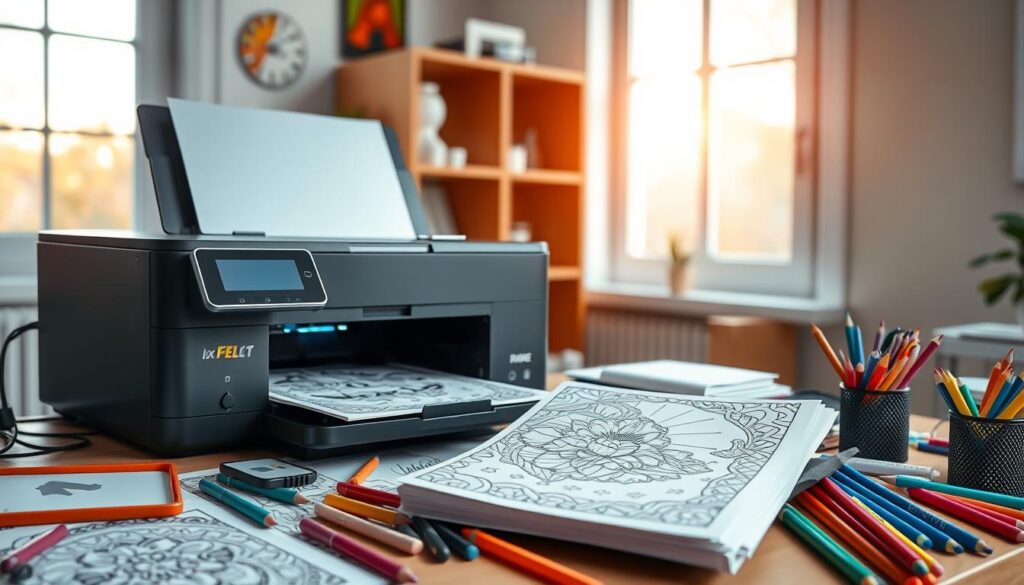
Printing at home can save money and be easy, especially for small runs. You’ll need a top-notch printer and the right paper. Investing in a good printer that fits your paper size and type is key.
Think about the paper type and size for your coloring book. Try different weights and finishes to find the best one.
Working with Professional Printers
For bigger orders or a pro look, go for a professional printer. Professional printers offer many choices, like paper types, binding, and finishes. They can also help pick the best printing for your book.
When picking a professional printer, look at their skills, prices, and reviews. Make sure they can handle your needs for quality, quantity, and speed. Some specialize in coloring books and can offer great advice.
Whether you print at home or use a pro, aim for high-quality results. By weighing your options, you can make a coloring book that’s fun and lasts long.
Marketing Your Coloring Book
Marketing a coloring book needs a mix of online and local selling. Creators must use many ways to show their book to more people.
Effective Online Promotion Strategies
Online promotion is key for a coloring book’s success. Creators can share their work on Instagram, Facebook, and Pinterest. High-quality images and engaging content draw in customers. Working with influencers and bloggers in coloring and art can also help.
Using online stores like Amazon and Etsy is smart too. Creators should use keywords like adult coloring books or coloring books for kids to get found more easily.
Exploring Local Selling Opportunities
Don’t forget about local selling. Creators can show their books at craft fairs, art shows, and book signings. Building a local customer base can lead to more sales through word-of-mouth.
Teaming up with local shops, like bookstores and art supply stores, is also good. Offering workshops or coloring classes in these places can attract more people.
Pricing Your Coloring Book
Figuring out the right price for a coloring book is key. It’s all about making sure you sell well and make money.
Factors to Consider for Fair Pricing
There are a few things to think about when setting a price. Production costs like printing and materials are big ones. Also, who you’re selling to and how much they might pay is important.
Other things to look at are the book’s special features and how it stands out. And don’t forget about the competition out there.
Researching Competitor Prices
Looking at what others charge is crucial. It helps you figure out a good price for your book. This way, you can stay competitive.
It’s smart to compare prices of similar books. Look at their quality and what makes them special. This helps you price your book right.
To do good research, you can:
- Check out online stores like Amazon
- Look at your competitors’ websites and social media
- Visit bookstores or art supply shops
By knowing what others charge, you can set a price that’s fair and makes you money.
Publishing and Distributing Your Coloring Book
After finishing your coloring book, it’s time to publish and share it with your audience. You have two main choices: traditional publishing or self-publishing.
Traditional vs. Self-Publishing Routes
Traditional publishing means working with big publishing houses. They offer editing, marketing, and distribution help. Self-publishing lets you control the process, saving money and keeping creative freedom. Sites like Amazon Kindle Direct Publishing (KDP) and IngramSpark make self-publishing easy.
Channels for Distribution and Sales
You can sell your coloring book online on Amazon, Etsy, and eBay. You can also sell it on your own website with plugins like Shopify or WooCommerce. Don’t forget to partner with local stores to stock your book. Good distribution and sales plans help you reach more people and get your book noticed.
To download children’s coloring books: here