Are you curious about making your content more accessible? Converting written works into audio formats is now more popular than ever. It’s a smart move for many reasons.
Turning your Ebook into an audio experience can grow your audience. Recent studies show it boosts accessibility and opens new ways to enjoy content.
The journey starts with Text-to-Speech technology to make top-notch audio. This guide will show you how to turn your written work into an engaging audio format. It’s a great way to share your message with more people.
Understanding the Basics of Ebook and Audiobook Formats
Before we dive into converting ebooks to audiobooks, let’s get the basics right. Ebooks and audiobooks are both popular for their ease of use. They cater to different ways people like to enjoy books.
What is an Ebook?
An ebook is a digital book you can read on many devices. This includes e-readers, tablets, smartphones, and computers. They come in formats like EPUB, MOBI, or PDF, fitting different screens well.
Ebooks have many perks. You can carry lots of books in one place. You can change font sizes for better reading. Plus, you can bookmark and take notes.
What is an Audiobook?
An audiobook is a book turned into sound. It’s meant to be listened to, not read. You can enjoy it while driving, working out, or just unwinding.
Audiobooks come in formats like MP3, AAC, and WMA. You can play them on phones, MP3 players, and smart speakers.
Key Differences Between Ebooks and Audiobooks
The main difference is how you use them. Ebooks are for reading, while audiobooks are for listening. This changes how content is made and enjoyed.
| Feature | Ebooks | Audiobooks |
|---|---|---|
| Consumption Method | Read on a device | Listened to through audio |
| File Formats | EPUB, MOBI, PDF | MP3, AAC, WMA |
| Device Compatibility | E-readers, tablets, smartphones, computers | Smartphones, MP3 players, smart speakers |
Knowing these differences is key for authors and publishers. It helps them make their ebooks into audiobooks that listeners will enjoy.
Benefits of Converting Your Ebook to Audiobook
Turning your ebook into an audiobook opens up new ways to connect with your audience. This change not only grows your audience but also makes the user experience better. It could also lead to more sales.
Expanding Your Audience Reach
By making your ebook into an audiobook, you reach more people. Audiobooks appeal to different learning styles and preferences. This means more people can enjoy your work, including those who like listening better than reading.
Multitasking is a big plus of audiobooks. Listeners can enjoy your content while doing other things. This means more people can hear your story.
Enhancing User Experience
The immersive experience of audiobooks can make your content more engaging. A skilled narrator can make your story come alive. This adds feelings and details that text might miss.
Also, audiobooks offer a unique narrative experience. The narrator’s voice, speed, and emphasis can make your story more fun and powerful. This makes listening more enjoyable.
Increasing Sales Opportunities
Turning your ebook into an audiobook can open up new revenue streams. Audiobooks are getting more popular. By offering your content in this format, you can attract more buyers and possibly boost your sales.
Also, having both ebook and audiobook versions can meet different customer preferences. This makes your work more attractive to a wider audience. It could lead to higher sales.
Tools and Software for Conversion
To turn your ebook into an audiobook, you need the right software. The best tool can greatly improve your audiobook’s quality.
Popular Audiobook Creation Software
Many software options are popular among authors and publishers. Murf, Camb.ai, and Podcastle are well-liked. They have Text-to-Speech features that make your ebook sound like a real audiobook.
Murf is easy to use and has realistic voices. Camb.ai has cool features like voice cloning. Podcastle has tools for recording, editing, and publishing audiobooks.
Free vs. Paid Options
You can pick between free and paid audiobook software. Free tools are good for beginners or those on a budget. But, they might have fewer features and lower quality.
Paid software has more features, better support, and higher quality. Your choice depends on your needs and budget. For top-notch results, consider investing in paid software.
Choosing the Right Tool for Your Needs
Choosing the right tool involves looking at several things. First, think about the features you need, like Text-to-Speech or editing. Then, think about your budget and the quality you want.
- Check how easy the software is to use.
- Look at the output quality and any limits.
- See if there’s good customer support and resources.
- Make sure it fits with your current workflow.
By looking at these factors, you can pick the best tool for your audiobook. This ensures your final product is top-notch.
Preparing Your Ebook for Conversion
Getting your ebook ready for audiobook conversion is key. It involves several important steps. These steps make sure your audiobook is engaging and top-notch.
Editing Your Content
Editing your ebook before turning it into an audiobook is crucial. It makes sure your story flows well and there are no mistakes. Since audiobooks are listened to all at once, any errors can be jarring.
Key editing tasks include:
- Correcting grammatical and spelling errors
- Improving sentence structure for better flow
- Ensuring consistency in formatting and style
Choosing the Right Narration Style
The narration style greatly affects how listeners enjoy your audiobook. The right style depends on your ebook’s genre and the mood you aim to create.
Considerations for narration style:
- The genre of your ebook (e.g., fiction, non-fiction, children’s book)
- The intended audience and their preferences
- The tone you want to convey (e.g., serious, humorous, inspirational)
Formatting Considerations
Good formatting is essential for a smooth conversion. Make sure your ebook is in a format that works with audio software. Also, the layout should be right for turning into an audiobook.
| Formatting Aspect | Description | Importance |
|---|---|---|
| File Format | Ensure the ebook is in a format compatible with audio conversion software. | High |
| Layout and Structure | A well-structured layout helps in maintaining the narrative flow in the audiobook. | High |
| Headings and Subheadings | Proper use of headings can aid in navigation and section identification during narration. | Medium |

By editing well, picking the right narration style, and thinking about formatting, you can make sure your ebook is ready for a great audiobook.
Recording Your Audiobook
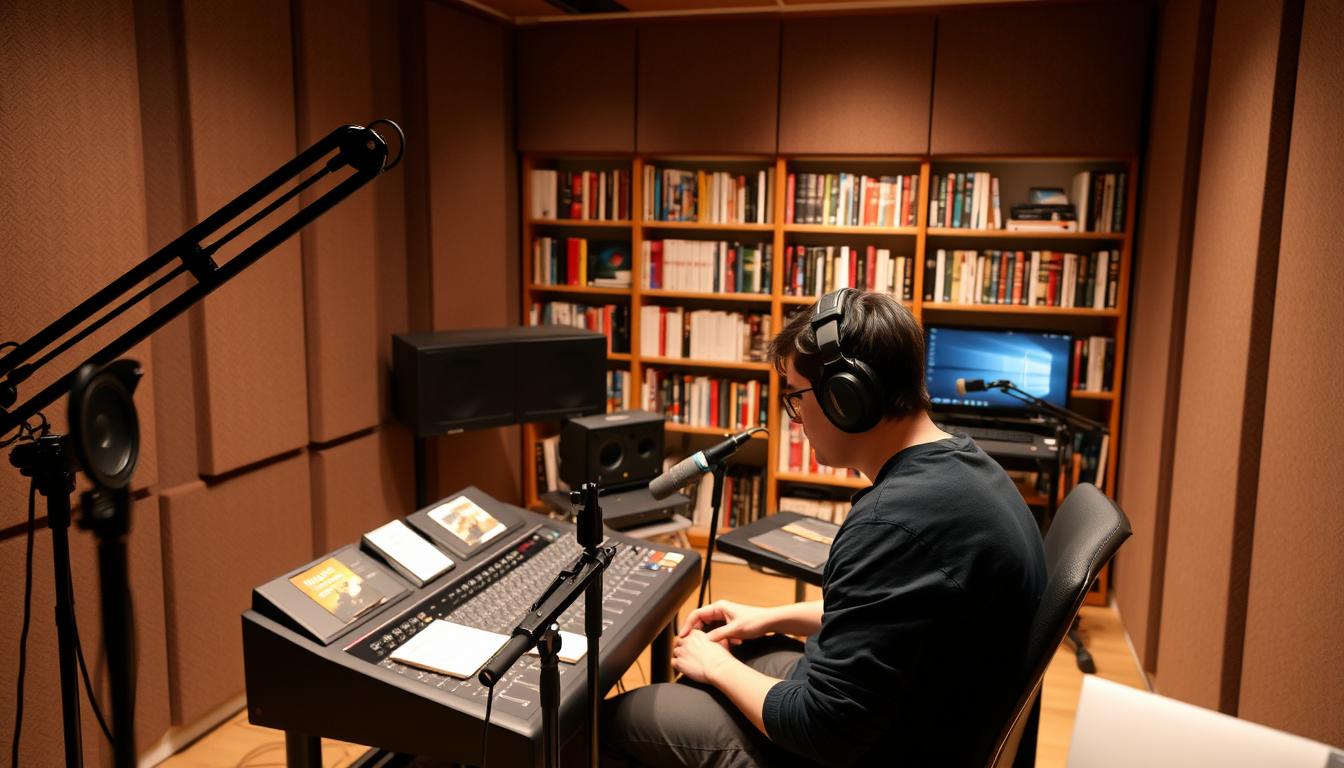
Recording an audiobook takes several steps. You need to set up your recording space and pick the right microphone. Each step is important for a high-quality audiobook.
Setting Up a Quiet Recording Space
A quiet space is key for a good audiobook. Here’s how to get it:
- Find a room with little outside noise.
- Use acoustic panels to cut down echo and reverberation.
- Turn off any appliances or devices that might make noise.
Selecting the Right Microphone
Choosing the right microphone is crucial for clear audio. Consider these factors:
| Microphone Type | Characteristics | Suitability for Audiobooks |
|---|---|---|
| USB Microphones | Easy to connect, plug-and-play | Perfect for beginners and home recording |
| Dynamic Microphones | Durable, good against background noise | Great for less controlled environments |
| Condenser Microphones | Sensitive, captures wide range of frequencies | Best for detailed narration in a controlled space |
Tips for Effective Narration
Good narration keeps listeners interested. Here are some tips:
- Practice: Read your material many times to know it well.
- Pace Yourself: Keep a steady pace to keep listeners engaged.
- Emphasize: Use inflection and emphasis to show emotion and highlight points.
- Record in Segments: Break your recording into smaller parts for easier editing.
By following these tips, you can make your narration better. This will make your audiobook more engaging for listeners.
Editing Your Audiobook
Editing turns your audiobook into a polished product. It’s key to making it sound professional and engaging.
Basic Audio Editing Techniques
Basic editing includes several steps. First, you must review your recording for mistakes or areas to improve. Tools like Audacity or Adobe Audition help trim unnecessary parts, adjust volume, and ensure a smooth flow.
Noise reduction is a crucial technique. It makes the listening experience better by reducing background noise. Also, adjusting the equalization (EQ) balances audio frequencies, making the narration clearer.
Adding Background Music and Sound Effects
Background music and sound effects can make your audiobook more immersive. Choose music that complements the narrative without overpowering it. Make sure any music or sound effects are copyright-free or properly licensed.
Sound effects can enhance key moments in your story, like a door creaking or a storm. But use them sparingly to avoid distracting the listener. The goal is to subtly enhance the narrative.
Removing Mistakes and Flubs
Mistakes can happen even with careful recording. Removing them is a critical part of editing. Use audio editing software to cut out flubs and join the remaining parts seamlessly.
It’s also important to listen back to your edited audiobook to check if the edits are smooth. This ensures the flow and coherence of the narration.
Finalizing Your Audiobook
The last steps in making an audiobook are just as key as the first. This part makes sure your audiobook is top-notch and ready to share.
Exporting to the Right File Format
Choosing the right file format is key for sharing your audiobook. Most places want MP3 or WAV files. MP3 is the most accepted format because it saves space without losing too much quality.
- MP3: Great for most places because it’s good quality and small.
- WAV: Needed for top-quality audiobooks, but they’re bigger.
Creating an Audiobook Cover
Your audiobook cover is what grabs people’s attention first. It’s very important for marketing. It should look good, match your story, and follow the platform’s rules.
Important things for your cover include:
- Dimensions: Make sure it’s the right size for where you’re sharing it.
- Content: It should show what your audiobook is about.
- Text: Put the title and author name on it, so they’re easy to read.
Ensuring Quality Control
Quality control is the last step to make sure your audiobook is perfect. You’ll check the audio, cover, and all the details.
Steps for Quality Control:
- Listen to a part of the audiobook to find any mistakes.
- Make sure the cover looks good and meets the rules.
- Double-check all the details, like title and narrator.
By finishing your audiobook well, you make sure it’s the best it can be for your listeners.
Distribution Platforms for Audiobooks
Audiobook distribution platforms are key to sharing your stories with listeners around the world. With more people listening to audiobooks, many platforms have popped up. It’s important for authors and publishers to know these platforms to reach more people.
Popular Audiobook Distribution Channels
There are several channels to share your audiobook with many listeners. ACX (Audiobook Creation Exchange) is a top choice, especially for Amazon fans. Other big names include Findaway Voices and Audiobooks.com. Each has its own special features and benefits.
How to Use ACX for Amazon Distribution
ACX is great for getting your audiobook on Amazon. First, make an ACX account and upload your audiobook. You’ll need to give details like title, author, and narrator. ACX lets you pick your royalty share, making it flexible for creators.
Once your audiobook is up, it will be on Amazon, including Audible and Amazon Music.
- Create an ACX account and upload your audiobook.
- Choose your royalty share option.
- Set your audiobook price and distribution channels.
Alternatives to Audible
Audible is big in audiobooks, but there are other great options. Kobo Audiobooks, Google Play Books, and Apple Books offer a lot of reach. Also, Audiobooks.com and LibriVox are good choices for distribution. Spreading your audiobook across different platforms can increase its visibility.
| Platform | Royalty Rate | Notable Features |
|---|---|---|
| ACX | Up to 40% | Direct distribution to Amazon and Audible |
| Findaway Voices | Varies | Distribution to multiple platforms |
| Audiobooks.com | Varies | Large library, user-friendly interface |
Marketing Your Newly Created Audiobook
To make your audiobook a hit, you need a solid marketing plan. This means knowing your audience, using smart marketing tactics, and being active on social media.
Identifying Your Target Audience
Finding out who your audiobook is for is key. Look at age, what they like to read, and how they listen. Knowing your perfect listener helps you market better.
Key factors to consider when identifying your target audience include:
- Age and gender demographics
- Genre preferences
- Listening habits and favorite platforms
- Previous audiobook purchases or listens
Effective Marketing Strategies
Choosing the right marketing can really help your audiobook stand out. Some good strategies are:
- Running promotional campaigns to get people excited about your audiobook.
- Utilizing email marketing to talk directly to your fans.
- Collaborating with influencers in your genre to reach more people.
- Optimizing your audiobook’s listing on platforms with the right keywords and descriptions.
Using Social Media to Promote Your Audiobook
Social media is a great way to promote your audiobook and connect with listeners. By sharing interesting content and talking to your followers, you can grow your fan base and sell more audiobooks.
Effective ways to use social media include:
- Sharing snippets or teasers from your audiobook
- Engaging with listeners through Q&A sessions or live chats
- Posting behind-the-scenes content to give insight into your production process
- Utilizing paid advertising options to target specific demographics
By using these strategies and adjusting them based on feedback, you can successfully market your audiobook. This will help you reach more people.
Legal Considerations When Converting
Turning an ebook into an audiobook requires careful legal steps. It’s not just about changing the format. You must also understand the legal sides of this change.
Copyright Issues With Your Ebook
Copyright issues are a big deal. Making an audiobook from an ebook is like creating a new version. You must own the rights or have permission to make it.
- Make sure your ebook’s content is original or licensed right.
- Update your contract with your publisher or others to cover audiobook rights.
- Watch out for any copyright problems in your ebook, like unauthorized images or quotes.
Licensing Your Audiobook Content
Licensing your audiobook content is key. If your ebook has copyrighted stuff, like images or quotes, you need the right licenses for the audiobook. This makes sure you can legally share the content in the new way.
For example, if your ebook has a big part from another author, you must get permission or a license. Not doing this could lead to copyright infringement claims.
Understanding Fair Use Policies
Fair use policies let you use copyrighted stuff without asking, but only under certain rules. Knowing these rules is important when making your ebook into an audiobook.
- Purpose and character of the use: Non-commercial use is more likely to be fair use.
- Nature of the copyrighted work: Using a factual work might be fair use.
- Amount and substantiality of the portion used: A small part might be fair use.
- Effect on the market: If your use hurts the original work’s market, it’s less likely to be fair use.
By thinking about these legal points, authors and publishers can make sure their audiobook is legal and successful.
Tips for Continuous Improvement
To make your audiobook better, you need to listen to what people say and look at sales numbers. Improving your audiobook takes a smart plan. This plan should cover many areas.
Gathering Feedback from Listeners
Getting listener feedback is key to knowing what your audience likes and doesn’t like. You can get feedback in many ways, such as:
- Reviews on audiobook platforms
- Surveys or questionnaires
- Social media engagement
- Email correspondence
Looking at this feedback helps you see where you can get better. This could be in how you narrate, the sound quality, or what you choose to talk about.
Analyzing Sales Data
Sales data analysis shows how well your audiobook is doing. Important things to look at include:
- Total sales and revenue
- Conversion rates
- Customer demographics
- Sales trends over time
By checking these, you can see if your marketing is working. You can also find ways to sell more audiobooks.
Iterating on Future Audiobook Projects
What you learn from feedback and sales data should guide your next audiobook. Here are some ways to make your next audiobook even better:
- Change your narration style or tone based on what listeners like
- Pick topics or genres that are popular
- Upgrade your production quality with better equipment or software
- Try new ways to market your audiobook
By always trying to get better, you can make your audiobook more enjoyable. This will make listeners happier and help you sell more.
Resources for Aspiring Audiobook Creators
Aspiring audiobook creators have many resources to improve their skills. These tools help them turn ebooks into audiobooks and boost their production quality.
Valuable Books and Courses
Looking to get better at narration or learn about making audiobooks? Books like “Voice-Over Voice Actor” by Yuri Lowenthal and Tara Platt are great. Online courses on Udemy and Coursera also offer valuable insights. They teach voice acting, narration, and audio production.
Engaging with Online Communities
Online forums like the Audiobook Creation Exchange (ACX) and Reddit’s r/audiobooks are great for creators. They can share experiences, get feedback, and learn from others. These communities offer support and help during the production process.
Staying Updated with Industry Insights
Stay current with the audiobook world through blogs like AudioFile Magazine and podcasts like “The Audiobook Business”. They share the latest trends and best practices. This way, creators can keep up with changes and get better at their craft.