

Can coloring really change a child’s life? The answer is yes. Coloring books have many benefits. For years, kids have loved coloring, and it’s more than just fun.
Studies show that coloring books help kids with fine motor skills and focus. As they color, they improve hand-eye coordination and dexterity. These skills are key to school success.
Coloring lets parents and caregivers help kids grow. It’s not just for fun. It’s a way to help kids develop their minds.
The Importance of Fine Motor Skills in Child Development
Children’s ability to make precise movements is key to their growth and independence. Fine motor skills involve small muscle groups in the hands and fingers. They are needed for tasks that require precision and control.
What Are Fine Motor Skills?
Fine motor skills are about making precise movements with the hands, fingers, and wrists. They are crucial for daily activities like dressing, feeding, and writing. Developing these skills is vital for children as it helps them interact with their world effectively.
How Are Fine Motor Skills Developed?
These skills grow through practice and repetition of precise activities. Examples include:
- Playing with playdough
- Using scissors to cut paper
- Dressing and undressing
- Drawing and coloring
Coloring books for kids are great for developing fine motor skills. They require children to hold crayons or pencils and make precise movements.
The Link Between Fine Motor Skills and Daily Activities
Fine motor skills are essential for daily activities. For example, tying shoelaces, buttoning shirts, or using utensils to eat require these skills. The table below shows some daily activities and the fine motor skills needed for them.
| Daily Activity | Fine Motor Skill Required |
|---|---|
| Tying Shoelaces | Dexterity and coordination of fingers |
| Using Utensils | Precision in holding and manipulating utensils |
| Dressing | Buttoning, zipping, and manipulating clothing |
In conclusion, fine motor skills are crucial for child development. They affect a child’s ability to do various daily activities. Understanding the importance and development of fine motor skills helps parents and caregivers support children in enhancing these essential abilities.
Benefits of Coloring for Motor Skill Development
Coloring books are great for kids to improve their motor skills. When they color, they strengthen their fingers, hands, and wrists. This is key to doing everyday things.
Enhancing Grip Strength and Control
Coloring makes kids hold crayons or pencils tightly. This boosts their grip strength. A firm grip is essential for writing, drawing, and even getting dressed.
- Improves finger dexterity
- Develops hand muscles
- Enhances overall grip control
Promoting Hand-Eye Coordination
Coloring within lines helps kids use their hands and eyes together. This boosts hand-eye coordination. It’s crucial for catching a ball, tying shoelaces, or playing a musical instrument.
- Develops the ability to follow instructions
- Improves spatial awareness
- Enhances fine motor control
As kids keep coloring, they get better at motor skills. They also lay a strong base for more complex activities.
Coloring Books: A Tool for Concentration
Coloring books are a special way to help kids improve their concentration and focus. They learn to pay close attention to details and keep their interest in a task.
The Role of Focus in Learning
Focus is key to learning. When kids concentrate, they learn and understand better. Coloring books help them focus, which is a vital skill.
Studies show that focusing on activities like coloring boosts a child’s school performance. Coloring books help kids concentrate better, making learning more effective.
How Coloring Engages the Mind
Coloring is more than just a physical activity; it also challenges the mind. Kids decide on colors, patterns, and staying within lines. This mental work boosts their concentration and problem-solving skills.
| Benefits of Coloring | Description |
|---|---|
| Improved Concentration | Coloring requires focus, helping children develop their ability to concentrate. |
| Enhanced Cognitive Skills | The activity promotes decision-making and problem-solving, enhancing cognitive development. |
| Better Academic Performance | By improving concentration and cognitive skills, coloring contributes to better academic outcomes. |
Adding coloring books to daily routines helps kids improve concentration and learning. Parents and teachers can use them as a valuable tool.
Different Types of Coloring Books for Kids
Coloring books for kids come in many types, like themed, educational, and interactive. These options help kids grow their creativity and skills. Parents can pick the best coloring books for their kids based on their interests and needs.
Themed Coloring Books
Themed coloring books focus on topics like animals, fairy tales, or superheroes. Kids love them because they match their favorite stories or characters.
- Animal Themes: These books teach kids about different animals and their homes.
- Fantasy and Adventure: They spark imagination with magic, adventure, or superhero themes.
These books are fun and help kids learn new things. They introduce new ideas and words.
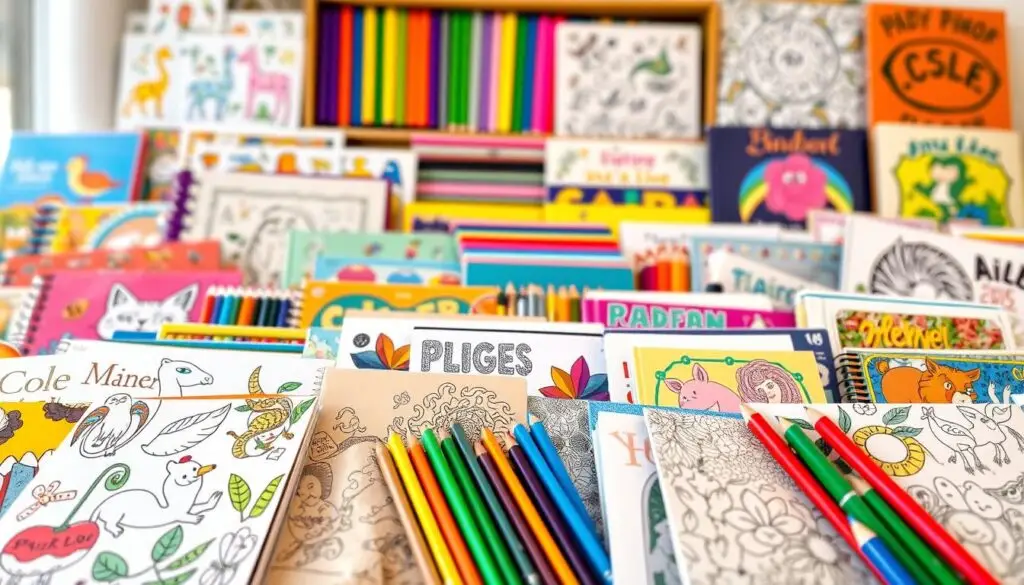
Educational Coloring Books
Educational coloring books teach kids about the alphabet, numbers, shapes, and science. They make learning fun and interactive.
- Alphabet and Numbers: These books help kids learn and remember the alphabet and numbers.
- Science and History: They introduce basic science and history in a way kids can understand.
These books mix learning with fun. They make learning enjoyable for kids.
Interactive Coloring Books
Interactive coloring books add puzzles, mazes, and connect-the-dots to traditional coloring. These activities make coloring more fun and challenging.
- Puzzles and Mazes: They improve problem-solving and hand-eye coordination.
- Connect-the-Dots: They help with fine motor skills and following instructions.
These books offer a fun way to learn and grow. They mix creativity with learning.
Recommended Age Groups for Coloring Books
Children’s coloring books are great for all ages. They help kids grow in different ways. The right book depends on the child’s age and how they’re developing.
Toddler Coloring Books
Toddlers love coloring books that show them big, simple pictures. These books help with fine motor skills and hand-eye coordination.
Preschool Coloring Options
Preschoolers need books with more than just simple pictures. These books have fun themes and characters. They help with creativity and imagination. Plus, they start teaching numbers and letters.
Coloring for Older Kids
Older kids enjoy books with harder pictures and patterns. These books challenge their creativity and patience. They match their advanced skills and interests.
In short, coloring books are key for kids’ growth at every age. Choosing the right book helps kids with their creativity and motor skills.
Emotional and Psychological Benefits of Coloring
Coloring for kids offers many benefits, like stress relief and boosting creativity. It profoundly impacts a child’s emotional health.
Stress Relief and Emotional Expression
Coloring is a healthy way for kids to show their feelings. It helps them relax and feel less stressed. This is because it keeps their mind focused on the moment.
Stress relief is a big plus. The act of coloring is calming, like meditation. It helps kids handle their feelings better.

Building Confidence Through Creativity
Coloring books help kids feel more confident. When they create, they feel proud of what they make. This boosts their self-esteem.
This creative expression lets kids try new things safely. It builds their confidence and helps them see their own worth. Coloring books are great for this.
Knowing how coloring helps kids, parents can see its value. It’s good for their well-being and growth.
Integrating Coloring into Daily Routines
Adding coloring to a child’s daily life can boost their brain and feelings. It’s a fun way for parents to help their kids grow creatively. This activity can make a big difference in their development.
Optimal Timing for Coloring
Finding the right time to color is key. Some kids like to color in the morning to start their day. Others find it calming before bed. Try different times to see what works best for your child.
Designing a Coloring Space
Having a special place for coloring can make it a regular part of their day. Set up a cozy area with crayons, markers, and coloring books. A neat and comfy space can spark their creativity and make coloring more fun.
By making coloring a part of their daily life, kids can improve their fine motor skills and focus. They also get to express their feelings better. This can make them more balanced and creative.