
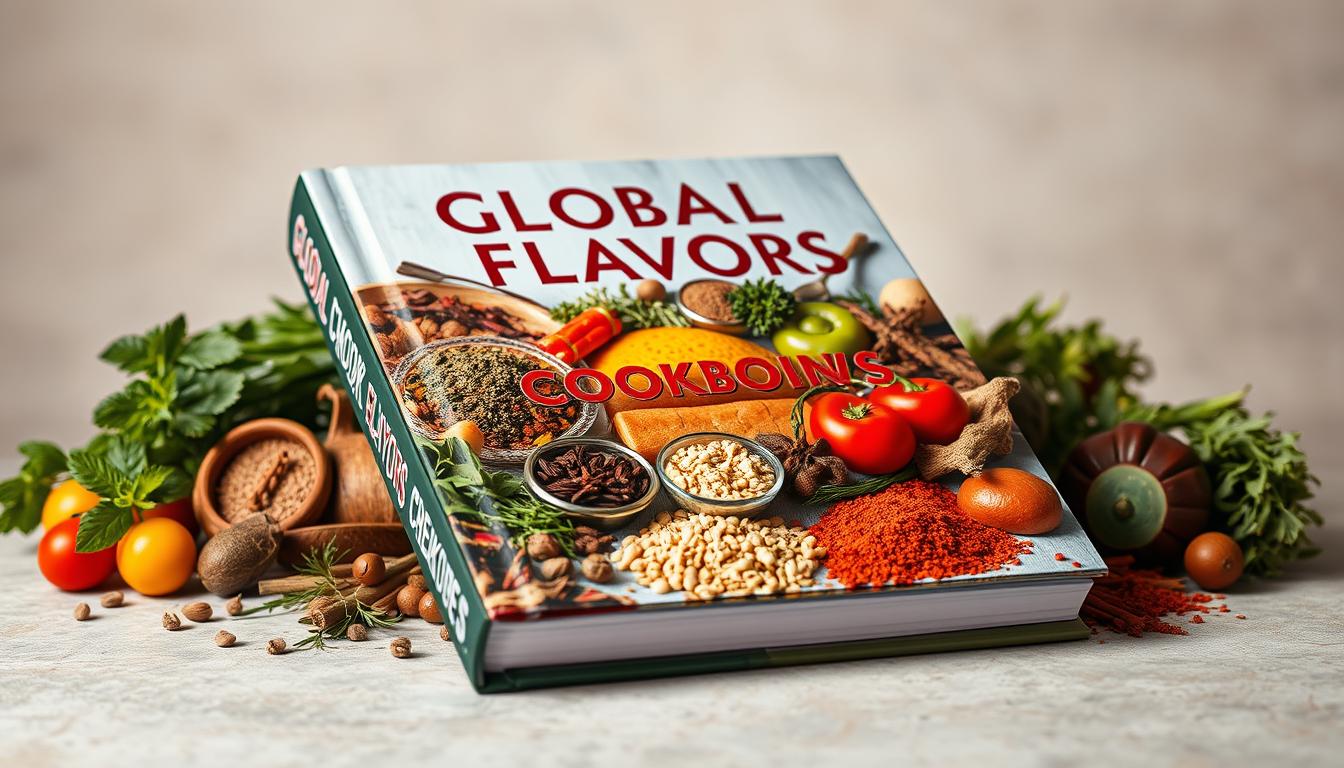
Did you know the world’s favorite dishes come from old family recipes? The Global Flavors Cookbook takes you on a trip to explore international cuisines.
Start a food adventure with this guide, filled with real recipes from everywhere. Discover the spicy tastes of Asia, the bold flavors of Europe, and the lively dishes of the Americas. This cookbook unlocks the secrets of global flavors for you.
The Global Flavors Cookbook is more than recipes. It’s a chance to dive into the rich culinary traditions from all over the world.
Discover the Rich Tapestry of Global Cuisines
Exploring global cuisines is like traveling through a world of flavors and stories. It not only delights our taste buds but also teaches us about different cultures.
Cookbooks are key in this journey. They open doors to the cooking traditions of many countries. They tell stories of history, geography, and culture.
Importance of Culinary Diversity
Culinary diversity shows the world’s rich cultural mix. It’s shaped by geography, history, and cultural exchange. It’s not just about different dishes but also cooking methods, ingredients, and meal contexts.
Cookbooks like “A Taste of the World” introduce us to international flavors and cultures. They promote understanding and diversity. They show the value of keeping traditional recipes while also trying new things.
Embracing Cultural Heritage
Cuisine is closely tied to cultural heritage. Traditional dishes often hold deep cultural and historical meaning. They represent the identity of communities.
The role of a cookbook is important. It keeps traditional recipes alive, educates about culture, and shares heritage. Cookbooks help us connect with the global community by exploring different culinary traditions.
Essential Cooking Techniques for International Dishes
Learning to cook international dishes is a journey. It takes patience, practice, and the right cookbook. Each culture has its own cooking methods and ingredients.
Knife Skills and Preparation
Knife skills are a must in cooking. You need to chop, slice, and dice ingredients well. A good cookbook will teach you these skills with clear instructions and maybe videos or pictures.
- Chopping: Learn to chop ingredients safely and quickly.
- Slicing: Find out how to slice ingredients thinly and evenly.
- Dicing: Master the skill to dice ingredients into uniform pieces.
Cooking Methods: From Stir-Frying to Sous Vide
Many cuisines use different cooking methods. Stir-frying is common in Asian dishes, while sous vide is popular in modern European cooking. A detailed cookbook will teach you various techniques, such as:
- Stir-frying: Cook ingredients quickly in a wok over high heat.
- Roasting: Cook food in the oven using dry heat.
- Sous vide: Cook food sealed in airtight bags in a water bath at a controlled temperature.
By learning these techniques, home cooks can try new dishes. Whether it’s making sushi or cooking hearty stews, knowing the right methods is essential.
A Journey Through the Americas
As we explore the Americas, we find a world of flavors. These flavors show the cultural heritage of each area. The food scene is rich and varied, with each country adding its own twist to traditional dishes.
Traditional Recipes from North America
North America is famous for its comfort foods. Dishes like turkey roast and mashed potatoes are favorites in America. Canada’s food scene is shaped by French and British influences, with hits like poutine and butter tarts.
| Recipe | Country | Main Ingredients |
|---|---|---|
| Turkey Roast | USA | Turkey, vegetables, herbs |
| Poutine | Canada | Fries, cheese curds, gravy |
| Clam Chowder | USA | Clams, potatoes, cream |
South American Culinary Staples
South American food combines indigenous, Spanish, and Portuguese tastes. Feijoada, a rich bean stew, is a favorite in Brazil. Meanwhile, asado, a traditional barbecue, is loved in Argentina and Uruguay.
Caribbean Flavors and Ingredients
The Caribbean is known for its lively flavors. It focuses on jerk seasoning, coconut milk, and fresh seafood. Favorites like jerk chicken and conch fritters show the Caribbean’s cultural mix.
Cookbooks like “Global Flavors, Air Fryer Cookbook World Cuisines Made Simple” share recipes from across the Americas. They highlight the region’s culinary diversity. Whether you want to try traditional dishes or explore new tastes, the Americas have something for every food lover.
Exploring Classic European Fare
European cuisine is a journey through flavors. It ranges from France’s fancy dishes to Italy and Eastern Europe’s warm comfort foods. Cookbooks often highlight these classic dishes.
French Cuisine: A Touch of Elegance
French cooking is known for its elegance. Dishes like Coq au Vin and Bouillabaisse are French favorites. They use fresh ingredients and traditional methods.
Key French Dishes:
- Coq au Vin
- Bouillabaisse
- Ratatouille
Italian Comfort Foods
Italian food is loved for its warmth and simplicity. It includes pasta, pizza, risottos, and osso buco. Italian cookbooks offer easy and tasty recipes.
| Dish | Region | Description |
|---|---|---|
| Pasta Carbonara | Lazio | A rich pasta dish made with eggs, parmesan, and guanciale |
| Pizza Margherita | Campania | A classic Neapolitan pizza topped with tomato sauce, mozzarella, and basil |
| Osso Buco | Lombardy | Braised veal shanks cooked in white wine and broth, served with risotto |
The Delights of Eastern European Cooking
Eastern European food is full of hearty dishes. Influenced by history and culture, it includes pierogies, goulash, and kielbasa. These dishes are found in many Eastern European cookbooks.
The use of local ingredients such as potatoes, cabbage, and meat has shaped the cuisine into what it is today.
European cuisine is rich and varied. It inspires cooks worldwide. Whether you’re into French, Italian, or Eastern European dishes, there’s much to learn from European cookbooks.
Tantalizing Tastes of Africa
African cuisine spans from the Mediterranean to the Cape of Good Hope. It’s a journey through diverse flavors. The continent’s food is rich in culture and unique spices, making it exciting for any Cookbook.
Regional Specialties: North to South
African food changes from north to south. Each area has its own special dishes. In North Africa, you’ll find tagines and couscous, influenced by Mediterranean and Middle Eastern tastes.
West Africa is known for bold flavors, like in jollof rice and suya. East Africa’s food is both tasty and aromatic, with favorites like injera and tibs.
Southern Africa has a unique taste, blending indigenous, Dutch, and British flavors. You’ll enjoy dishes like bobotie and boerewors here.
Unique Ingredients and Spices
African food is famous for its unique spices and ingredients. Ethiopia’s berbere spice and North Africa’s ras el hanout are key. These spices define the flavors of many dishes.
| Region | Key Ingredients | Popular Dishes |
|---|---|---|
| North Africa | Cumin, coriander, preserved lemons | Tagine, couscous |
| West Africa | Chili peppers, peanuts, ginger | Jollof rice, suya |
| East Africa | Berbere spice, onions, garlic | Injera, tibs |
| Southern Africa | Madras curry powder, dried fruits, vinegar | Bobotie, boerewors |
These specialties and ingredients show the diversity of African food. They also stress the need for such recipes in a detailed Cookbook.
The Vibrant Flavors of Asia
Asia’s diverse culinary traditions, like Chinese, Indian, and Japanese, offer a wide range of tastes. These cuisines are known for their bold flavors, varied ingredients, and complex cooking methods. This makes them a great topic for any Cookbook.
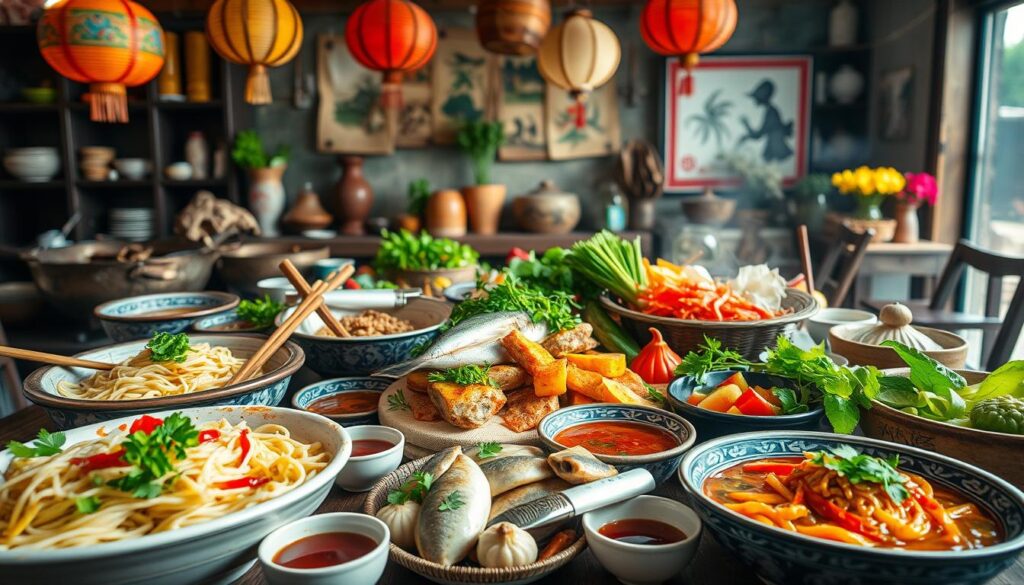
Asian cooking is complex and varies by region. Chinese cuisine, for example, uses stir-frying and steaming. It also focuses on fresh ingredients and seasonings.
Chinese Culinary Arts
Chinese cooking is ancient and very influential. It includes many techniques, from simple stir-fries to complex braises. Ingredients like ginger, garlic, and soy sauce add to the flavor of Chinese dishes.
Indian Spice Palettes
Indian cuisine is famous for its rich spice use. The art of mixing spices, or masalas, is key. Spices like turmeric, cumin, coriander, and chili peppers make Indian food warm and aromatic.
Japanese Cuisine and Presentation
Japanese cooking focuses on presentation and using seasonal ingredients. Sushi-making, for example, requires great skill. Japanese dishes often use simple, fresh ingredients, highlighting their natural taste through grilling and steaming.
In conclusion, Asia’s vibrant flavors show the region’s rich culinary diversity. Exploring these cuisines through a Cookbook is rewarding. It offers insights into the techniques and ingredients that make Asian food unique.
Culinary Secrets from the Middle East
The Middle East is a treasure trove of flavors and traditions. Its cuisine is a mix of Arabic, Persian, Turkish, and Kurdish cultures. This blend creates a unique taste experience.
Food is at the heart of Middle Eastern hospitality. Guests are welcomed with a variety of dishes. These dishes show the region’s rich culinary diversity.
Famous Dishes to Try
Here are some famous Middle Eastern dishes:
- Shawarma: A street food with grilled meat, veggies, and tahini sauce in a pita.
- Tabbouleh: A salad with bulgur, parsley, tomatoes, mint, olive oil, and lemon juice.
- Falafel: Crispy chickpea patties in a pita with tahini sauce and veggies.
Key Ingredients and Spices
Middle Eastern dishes use many ingredients and spices. Some key ones are:
| Ingredient | Description | Common Use |
|---|---|---|
| Sumac | A tangy, crimson spice | Flavors salads and grilled meats |
| Cardamom | A sweet, aromatic spice | Used in desserts and coffee |
| Pomegranate Molasses | A thick, fruity syrup | Adds sweetness and depth to dishes |
The Role of Hospitality in Middle Eastern Dining
Dining in the Middle East is more than just eating. It’s about hospitality and generosity. Hosting guests means offering lots of dishes to show respect and warmth.
This focus on hospitality is seen in how meals are served. Meals often have many courses and flavors.
Vegetarian and Vegan Global Delights
More people want to eat plant-based, so cookbooks now have vegetarian and vegan dishes from around the world. This makes it easy for readers to try new recipes that fit their diet.
Plant-Based Dishes from Various Cultures
Global cuisines have many vegetarian and vegan options. These dishes use local ingredients and follow traditional cooking methods. For example, Indian food is famous for its vegetarian dishes like palak paneer and chana masala.
Middle Eastern food also has vegan-friendly choices like falafel and tabbouleh. These dishes are tasty and show the region’s love for fresh herbs and ingredients.
Adapting Traditional Recipes
Changing traditional recipes to be vegetarian or vegan is easy. Just swap out meat for plant-based proteins like tofu or tempeh. This makes a dish vegan-friendly.
The table below shows some common swaps for adapting recipes:
| Ingredient | Traditional Use | Vegetarian/Vegan Alternative |
|---|---|---|
| Meat | Main protein source | Tofu, tempeh, or seitan |
| Dairy Milk | Cooking and baking | Almond milk, soy milk, or coconut milk |
| Eggs | Binding agent | Flaxseed, chia seeds, or aquafaba |
By using these swaps, cooks can enjoy their favorite dishes from around the world. They can do this while sticking to their dietary choices. All this is possible thanks to a Cookbook that meets many tastes and needs.
Sweet Treats from Around the World
Sweet treats have no borders. Desserts are loved by people everywhere. A Cookbook with global desserts shares recipes and cultural stories.
Iconic Desserts to Savor
Exploring desserts from around the world is exciting. Try the Crème Brûlée from France or Mochi from Japan. Each dessert shows off a culture’s history and traditions.
- Tiramisu from Italy, a coffee-soaked ladyfinger dessert.
- Gulab Jamun from India, deep-fried dumplings soaked in rose syrup.
- Churros from Spain, fried dough pastry coated in cinnamon sugar.
Baking Techniques and Tips
To make these desserts at home, you need to know how to bake. Skills like tempering chocolate and making pastry dough are key. Here are some tips:
- Use the best ingredients for better flavor and texture.
- Stick to the recipe, especially with measurements and temperatures.
- Don’t get discouraged by first-time failures.
Mastering these techniques lets you make a wide range of desserts. Whether you’re making a Cookbook or just trying new flavors, desserts offer endless possibilities.
Tips for Stocking a Global Pantry
Building a global pantry is exciting and rewarding. It lets you explore many cuisines from around the world. With the right ingredients and tools, you can cook dishes from different cultures.
Essential Spices and Ingredients
Start by gathering essential spices and ingredients for international cooking. You’ll need things like olive oil, coconut milk, and spices like cumin and turmeric. Also, have grains, legumes, and canned goods on hand for various dishes.
For beginners, a cookbook is a great help. It teaches you about key ingredients and cooking techniques. Cookbooks also give tips on finding specialty items and substituting ingredients.
Kitchen Tools for Worldwide Recipes
Having the right kitchen tools is key for global dishes. You might need a wok for stir-fries, a tagine for stews, or a bamboo steamer for dumplings. While you don’t need every tool, a few key ones can open up new cooking possibilities.
Some must-haves include a good chef’s knife, a cutting board, and measuring cups and spoons. Quality tools that fit your cooking style can greatly enhance your experience.
Focus on both ingredients and tools for global cooking. This way, you can build a pantry that’s truly international. Whether you aim to cook a specific cuisine or just want to try new things, a well-stocked pantry is essential.
Bringing It All Together: Meal Planning and Cultural Celebrations
This cookbook opens up a world of flavors from everywhere. Meal planning turns into a fun journey. You can mix dishes from different cultures to create unique tastes.
Themed Dinner Parties
Hosting themed dinner parties is a great way to celebrate different cultures. Pick a cuisine like Italian or Indian to bring its true flavors and feel to your home. This cookbook helps make these events unforgettable.
Incorporating Global Flavors into Everyday Meals
Adding global flavors to your daily meals is easy. Just try a new spice or cooking method. This cookbook is full of recipes and ideas to spice up your cooking. Cooking becomes more fun when you explore global cuisines.
To download the book : ici