
Wondering how to give your child the best start? The answer is in the books you read together. Reading to young kids boosts skills like thinking, reading readiness, talking, and feeling emotions.
It’s key to pick age-appropriate books for your child’s growth. The right books for their age can spark a love for reading and help them succeed.
As a parent, you want the best for your child. Knowing how reading aids child development helps you choose the right books.
Understanding Developmental Milestones in Children
It’s key for parents and teachers to know about child development stages. Spotting these milestones helps pick the right learning stuff for kids at each age.
Importance of Age-Appropriate Learning
Learning that fits a child’s age is vital. It makes sure they get content that’s just right for them. Studies show reading to young ones boosts their thinking, reading, talking, and feeling skills.
Key benefits of age-appropriate learning include:
- Enhanced cognitive development
- Better retention of information
- Increased interest in learning
- Improved emotional intelligence
Cognitive Skills and Reading
Reading is key for kids’ brain growth. It introduces them to new words, how to put sentences together, and storytelling. These help them understand and think better.
Cognitive skills developed through reading include:
- Memory enhancement
- Improved concentration
- Analytical thinking
- Problem-solving abilities
Emotional Development Through Stories
Stories deeply affect kids’ feelings. They teach kids about feelings, letting them see things from others’ views, and learn right from wrong.
Through stories, kids can safely explore feelings. This helps them grow emotionally and stay well.
Age Ranges: Infant to Preschool (0-5 years)
The early years of a child’s life are crucial. The right books can greatly impact their learning. Children move from simple images to complex stories and interactive elements.
Best Learning Books for Infants
For infants, board books with simple, high-contrast images are perfect. These books are tough and can handle rough handling. “Goodnight Moon” by Amy Brown and “The Very Hungry Caterpillar” by Eric Carle are great picks.
Infants also enjoy books with different textures and sounds. For example, books with crinkly pages or sounds when touched are great for their senses.
Discovering Preschool Favorites
Preschoolers start to like more complex stories and interactive books. Pop-up books and those with flaps are especially fun. “The Very Hungry Caterpillar” and “Corduroy” by Don Freeman are favorites.
Preschoolers also like stories with simple plots. Books that teach counting, shapes, and problem-solving are very helpful.
Interactive Features to Look For
Interactive books keep young children engaged. Look for:
- Flaps to lift
- Buttons to press
- Zippers to zip
- Different textures to explore
- Sound effects
These features make reading fun. They also help with fine motor skills and hand-eye coordination.
| Age Group | Book Type | Features |
|---|---|---|
| Infants (0-1 year) | Board Books | High-contrast images, simple textures |
| Infants (1-2 years) | Interactive Board Books | Crinkly pages, sound effects |
| Preschoolers (3-5 years) | Pop-up Books, Storybooks | Complex narratives, flaps to lift, pop-ups |
Early Elementary Stage (6-8 years)
The early elementary stage is from 6 to 8 years old. It’s a key time for kids to start reading and explore different book types. At this age, they learn to read better and start using books to learn new things.
Engaging Learning Books for Early Readers
For young readers, it’s important to find books that keep them interested. These books have simple stories and fun pictures. Early readers do well with books that repeat the same text, which boosts their confidence.
- Books with colorful pictures and engaging storylines.
- Stories that reflect their everyday experiences or adventures.
- Simple, easy-to-understand language.
Transitioning from Picture Books to Chapter Books
Moving from picture books to chapter books is a big step. Chapter books have more complex stories and less pictures. Choosing the right chapter book is key; it should be fun but not too hard.
| Characteristics | Picture Books | Chapter Books |
|---|---|---|
| Illustrations | Predominantly illustrated | Fewer or no illustrations |
| Story Complexity | Simple stories | More complex, developed stories |
| Reading Level | Early reading skills | Developing reading skills |
Non-Fiction vs. Fiction Choices
Choosing between non-fiction and fiction books depends on the child’s interests and reading level. Non-fiction books can spark a love for learning, while fiction boosts imagination and empathy.
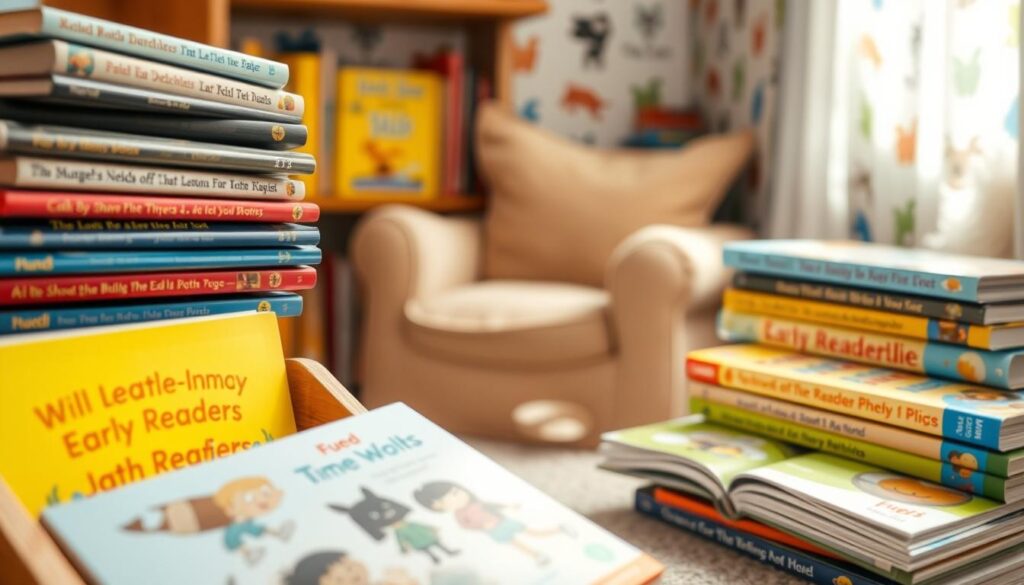
For kids aged 6-8, mixing fiction and non-fiction is good. Non-fiction can be about animals, science, or history. Fiction can be anything from fantasy to realistic stories.
Middle Childhood (9-12 years)
Middle childhood is a key time for reading growth. At this age, kids start to look for books that match their interests and skills. They read not just for fun but also to learn and grow.
Advanced Learning Topics for Preteens
Preteens can really benefit from books that make them think deeply about the world. Topics like science, history, and tough moral questions are especially interesting. Books that tackle these advanced topics can help kids love learning more and get ready for the ups and downs of being a teenager.
- Science and technology books that explain complex ideas in simple ways.
- Historical fiction and non-fiction that give insights into different times and places.
- Books that deal with social and emotional issues, helping preteens understand their changing world.
Encouraging Independent Reading Habits
It’s very important to encourage preteens to read on their own. Letting them pick their own books makes reading more fun. Parents and teachers can help by making a good reading space and guiding them to find books they like.
Here are some ways to encourage independent reading:
- Make sure they have time to read every day.
- Talk about the books they’re reading to help them understand better.
- Make a cozy and inviting place for reading.
Series Books That Foster Continuity
Series books are a hit with preteens because they offer a story that goes on and on. Well-written and exciting series keep kids eager to keep reading.
| Series Title | Genre | Description |
|---|---|---|
| Harry Potter | Fantasy | A magical series that follows the adventures of Harry Potter and his friends. |
| Diary of a Wimpy Kid | Humor/Realistic Fiction | A funny series about the middle-school life of Greg Heffley. |
| The Magic Tree House | Adventure/Fantasy | A series where siblings Jack and Annie go on time-traveling adventures. |
Importance of Illustrations and Design
Illustrations and design are key in children’s books. They grab young readers’ attention and help them understand the story better. The pictures in a book can make the story more fun and interactive.
Engaging Visuals draw kids in and help them remember the story. Well-designed illustrations make hard ideas simple for kids to get.
How Visuals Enhance Learning
Visuals in kids’ books do many things. They:
- Help kids understand the story better
- Spark their imagination and creativity
- Help different learning styles, like visual learners
Studies show that pictures help kids remember things better. Good pictures in books make them better tools for learning.
Choosing Books with Quality Illustrations
When picking out kids’ books, look at the pictures first. Here’s what to consider:
| Illustration Quality | Characteristics | Impact on Learning |
|---|---|---|
| High Quality | Detailed, colorful, fits the story | Makes reading more fun and clear |
| Low Quality | Blurry, simple, doesn’t match the story | Can make reading less fun and confusing |
Choosing books with great pictures helps kids learn more. It makes reading fun and educational for them.
Integrating Learning with Play
Learning through play is key for kids’ growth. Activity-based learning books help parents and teachers. They make learning fun and interactive.
This method boosts cognitive skills and creativity. It works for all learning styles, helping every child.
Activity-Based Learning Books
Activity-based learning books engage kids in hands-on learning. They have puzzles, games, and interactive elements to make learning fun.
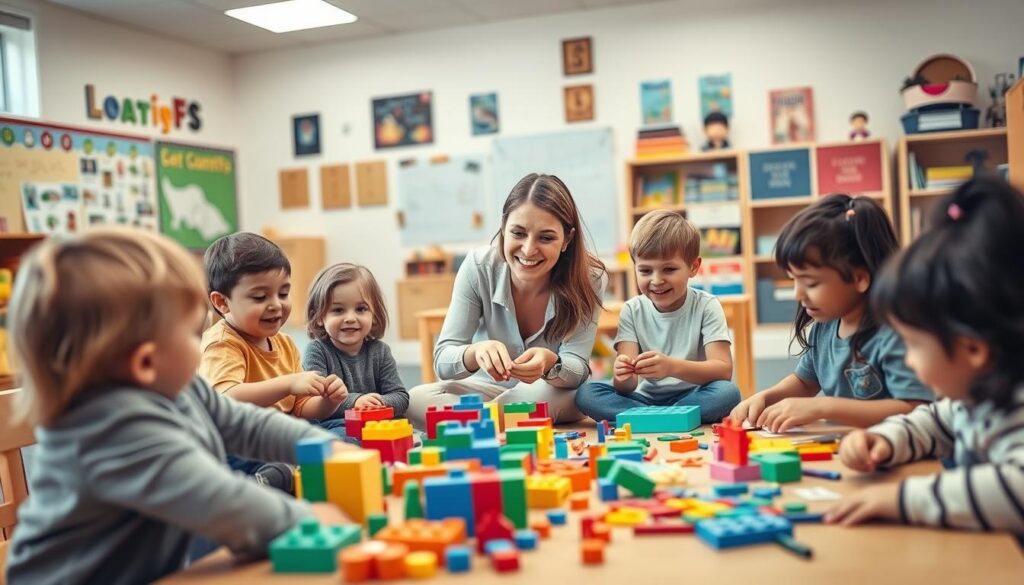
Examples include workbooks with mazes and coloring books that teach subjects. Storybooks also encourage kids to guess what happens next.
Resources for Parents and Educators
Parents and educators have many resources for activity-based learning. There are online platforms, activity books, and educational games. These can add to traditional learning.
Recommended resources include educational websites with free sheets and apps for learning. Community centers also host educational events.
Selecting Multicultural and Diverse Books
Multicultural and diverse books are key in shaping a child’s view of the world. They offer stories from various cultures and experiences. This helps kids develop empathy and see the world in a more inclusive way.
Representation is a big deal in these books. When kids see themselves in stories, it makes them feel seen and connected. This is especially true for kids from minority groups, who often see themselves less in mainstream books.
Representation in Children’s Literature
Representation in kids’ books is more than just having diverse characters. It’s about telling real and meaningful stories. Books that show different cultures and experiences help kids understand and value diversity.
- Look for books with diverse protagonists.
- Choose stories that celebrate different cultural traditions.
- Opt for books that tackle issues faced by diverse communities.
Benefits of Exposure to Different Cultures
Reading about different cultures has many benefits for kids. It widens their understanding of the world and builds empathy. By exploring diverse experiences, kids gain a deeper understanding of the world’s complexities.
- It boosts cultural awareness and understanding.
- It fosters empathy and compassion towards others.
- It encourages an appreciation for human diversity.
In conclusion, choosing multicultural and diverse books is vital for raising an inclusive and empathetic generation. By giving kids literature that shows the world’s diversity, we help them become more open-minded and understanding.
Tips for Encouraging a Love of Reading
Helping kids love reading opens up new worlds. A regular reading time and a cozy spot are crucial. These steps help kids enjoy reading.
Creating a Reading Routine
Start by picking a time each day for reading. It could be before bed, after dinner, or a quiet afternoon. Consistency is key to making reading a habit.
Begin with 15-20 minutes and grow the time as they get more into it. Make reading interactive by asking questions and encouraging them to read aloud.
- Choose a regular time and place for reading
- Start with books that are engaging and relevant to the child’s interests
- Be consistent and make reading a daily habit
Choosing the Right Environment for Reading
The right reading spot is important. Create a cozy and inviting space without distractions. It could be a bedroom corner, a special nook, or an outdoor area.
Make sure it’s well-lit and comfy, with pillows and blankets. Minimize distractions by turning off the TV and putting away devices.
By following these tips, parents can help their kids love reading for life.
Recognizing Challenges and Solutions
As kids grow, some may face reading hurdles. Knowing the signs of learning disabilities and using support strategies can really help.
Signs of Learning Disabilities in Reading
Books are great for spotting learning disabilities. A child’s ability to understand and enjoy different books shows their reading level. Parents and teachers should watch for signs like trouble with sounds, understanding, or reading smoothly.
Strategies for Supporting Reluctant Readers
For kids who don’t like reading, we need to make reading fun. This means picking books they like, doing fun reading activities, and praising them. This way, parents can help kids enjoy reading more.
By spotting challenges and using good support, we can help kids love reading for life.