
Authors and publishers face a big choice: what format is best for their next book? With ebook sales going up and down, the question is: should you go for digital publishing or traditional printing?
Recently, ebook sales have dropped, but printed book sales have gone up. This change makes us wonder about the future of book publishing. Knowing the differences between Ebook Ink and Traditional Printing is key to making a good choice.
Choosing the right format for a book can really affect its success. The debate between digital and print is ongoing. It’s important to consider the pros and cons of each option.
Understanding Ebook Ink and Its Benefits
Ebook ink has changed the publishing world, helping both readers and writers. It makes digital reading more comfortable and easy to access.
What is Ebook Ink?
Ebook ink, or e-ink, looks like real ink on paper. It’s used in e-readers to give a feel like reading a real book. Ebook ink displays are designed to be easy on the eyes, reducing glare and allowing for reading in various lighting conditions.
Advantages of Ebook Publishing
Ebook publishing has many benefits. You can quickly find and read a huge number of books without needing to store them. Ebooks work on many devices, like e-readers, tablets, smartphones, or computers. The flexibility to adjust font sizes and styles also enhances the reading experience.
- Instant access to a vast content library
- High portability and convenience
- Customizable reading experience
Accessibility and Distribution
Ebooks make books more available to everyone, including those with visual impairments. You can change font sizes and use text-to-speech. This opens up reading for people with disabilities. Plus, ebooks can be shared online, reaching people all over the world without shipping.
Distribution channels for ebooks are diverse, including online retailers and libraries, making it easier for readers to discover and access new titles. This also helps authors and publishers by cutting down on time and costs to get their work out there.
The Traditional Printing Process Explained
Traditional printing is a long-standing way to make physical books. It uses various processes and technologies. These have changed over time to meet different needs and budgets.
Overview of Traditional Printing
Traditional printing means making printed materials like books with real devices and stuff like paper and ink. It’s been around for ages. Many authors and publishers still choose it because it feels real and can be made in big numbers.
The process starts with getting the content ready, like editing and making it look right. Then, printing plates are made. These plates are used on printing presses to make the books.
Types of Traditional Printing Technologies
There are many traditional printing technologies, each with its own benefits and uses. Offset printing is a big one for making lots of copies. It uses a special way to transfer ink for high-quality prints.
Print-on-demand (POD) is another key one. It lets you print just what you need, one copy at a time. This is great for authors or books that aren’t sure how many to print.
Costs Involved in Traditional Printing
Traditional printing costs include materials like paper and ink, equipment like presses, and labor. The type of printing tech used changes these costs. For example, offset printing needs a big upfront cost for plates but is cheaper for lots of copies.
Print-on-demand costs are different. It charges per book, so it’s cheaper for small runs but more for big ones.
Knowing these costs helps authors and publishers plan their printing and budget better.
Comparing Formats: Ebook vs. Print
The debate between ebooks and print books has been ongoing. Each format offers a unique reading experience. We will look at the differences in reading experience, formatting challenges, and visual appeal.
Reading Experience Differences
Ebooks and printed books have different reading experiences. Ebooks let you adjust font sizes and styles, which helps readers with visual impairments. Printed books, on the other hand, offer a tactile experience with paper and ink.
Formatting Challenges in Each Medium
Formatting is key for both ebooks and print books. Ebooks need flexible formatting for different screens and devices. Print books require precise formatting for the page.
Ebooks can adjust margins and font sizes automatically. Print books need manual adjustments during design.
Visual Appeal and Presentation
The visual appeal of a book is important. Print books have a tangible cover and can be displayed on a shelf. Ebooks lack a physical presence but offer interactive elements like hyperlinks and multimedia content.
| Feature | Ebooks | Print Books |
|---|---|---|
| Adjustable Font Sizes | Yes | No |
| Tactile Experience | No | Yes |
| Interactive Elements | Yes | No |
| Physical Storage | No | Yes |
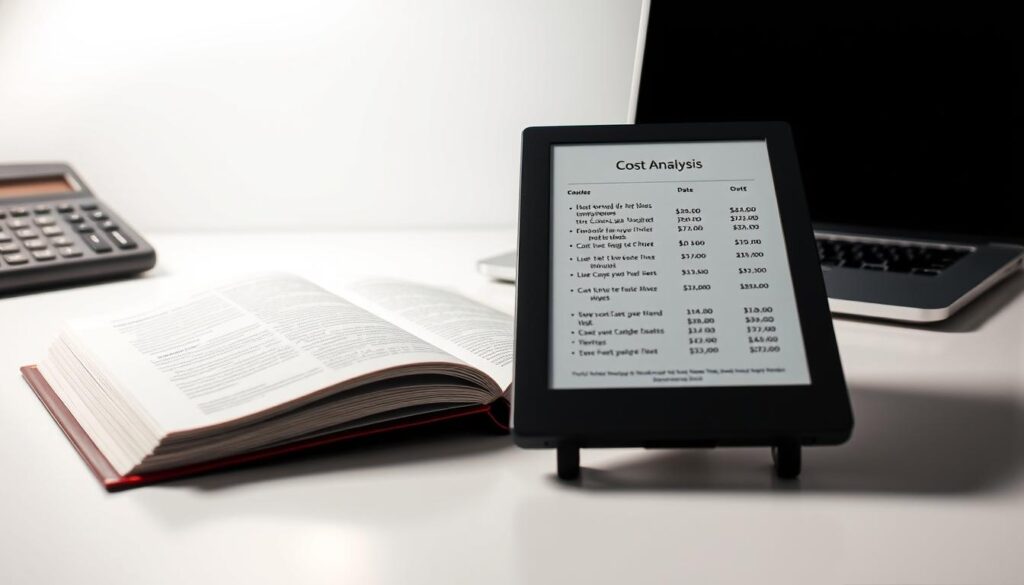
Cost Analysis: Ebook Ink vs. Traditional Printing
Choosing between ebook ink and traditional printing is a big decision. It’s important to know the costs for authors and publishers. The money spent on publishing can affect a book’s success.
Initial Investment Considerations
Ebooks usually cost less to start than printed books. You’ll spend on editing, cover design, and formatting for ebooks. Printed books add more costs like printing, binding, and getting them to stores.
Ebook Costs: Editing, cover design, formatting.
Traditional Printing Costs: Printing, binding, distribution, editing, cover design.
| Cost Component | Ebook Ink | Traditional Printing |
|---|---|---|
| Editing | $1,000 – $3,000 | $1,000 – $3,000 |
| Cover Design | $500 – $1,500 | $500 – $1,500 |
| Formatting | $500 – $1,000 | $0 – $1,000 |
| Printing | $0 | $2,000 – $5,000 |
| Binding | $0 | $1,000 – $3,000 |
| Distribution | $0 – $1,000 | $1,000 – $3,000 |
Long-Term Sales Potential
The future sales of ebooks and printed books depend on many things. This includes the book’s genre, who it’s for, and how it’s marketed. Ebooks can be updated and re-released, which might boost their value over time.
Hidden Costs to Consider
There are hidden costs for both ebooks and printed books. Ebooks might need conversion to different formats and digital rights management. Printed books have storage and shipping costs.
Knowing these costs helps you make a choice that fits your publishing goals and budget.
Audience Preferences: Ebooks vs. Printed Books
The debate between ebooks and printed books is about knowing what readers like. As the publishing world changes, it’s key to see what makes readers choose one over the other.
Demographics of Ebook Readers
Ebook readers come from all walks of life. Age plays a big role, with younger folks often preferring ebooks. But, older adults are also getting into ebooks, thanks to their ease and convenience.
Education level and income also matter. People with higher education and more money tend to read ebooks more. This is because they have better access to digital devices and are more likely to buy ebooks.
Factors Influencing Reader Choices
What makes someone choose ebooks over printed books? Convenience is a big plus for ebooks. They let you carry many books at once, change font sizes, and read in the dark without eye strain.
But, some people love the tactile experience of printed books. They enjoy being able to share or display physical copies.
- Ebooks are great for readers with disabilities because of features like text-to-speech and adjustable font sizes.
- Many see ebooks as better for the environment, which is another reason to choose them.
- Cost is also a factor, with ebooks often being cheaper than printed books.
Authors and publishers need to understand these factors and demographics. By choosing the right format for their books, they can make readers happier and boost sales.
Environmental Impact: Sustainable Publishing
The publishing world is moving towards greener practices. This includes looking at ebook ink and traditional printing’s environmental impact. As we all become more eco-aware, publishers must find ways to cut their carbon footprint while still sharing stories with readers.
Eco-friendliness of Ebooks
Ebooks are popular for being eco-friendly. They don’t need the paper and ink of traditional books. This means less carbon footprint. But, we must also think about the e-readers’ production and the energy needed to charge them.
Studies show ebooks are better for the planet than printed books, especially when it comes to shipping. Ebooks don’t need to be shipped, which cuts down on fuel use and emissions.
Traditional Printing and Its Footprint
Traditional printing, however, has a bigger environmental impact. It uses paper, ink, and a lot of energy. Also, shipping printed books adds to fuel use and emissions.
But, the publishing world is working on making traditional printing greener. They’re using recycled paper, eco-friendly inks, and printing less to waste less. These steps help reduce the environmental harm without losing quality.
In the end, both ebook ink and traditional printing have their environmental downsides. Ebooks are seen as greener, but traditional printing is getting better. The choice between them depends on what a publisher values most in sustainable publishing.
Marketing Strategies for Ebooks and Print Books
Authors need to know how to market ebooks and print books. Both aim to reach readers, but ebooks and print books need different strategies. This is because ebooks and print books are different in how they are used and shared.
Promoting Ebooks Effectively means using online tools and digital marketing. You can use email marketing, social media ads, and online book promotions. Also, platforms like Amazon Kindle Direct Publishing (KDP) help reach many readers.
Digital Marketing Techniques for Ebooks
- Email marketing to subscribers and book clubs
- Social media campaigns targeting specific demographics
- Amazon and other ebook retailer promotions
- Influencer partnerships with book bloggers and reviewers
Traditional Marketing Techniques for print books include in-store promotions and book signings. You can also use print ads in magazines and newspapers. Plus, attending literary festivals and conferences helps meet readers and industry folks.
Effective Traditional Marketing for Print Books
| Marketing Technique | Description | Target Audience |
|---|---|---|
| In-store Promotions | Book signings and readings at bookstores | Local readers, book clubs |
| Print Advertising | Advertisements in literary magazines and newspapers | Avid readers, literary enthusiasts |
| Literary Festivals | Participation in festivals and conferences | Authors, publishers, readers |
Knowing the right marketing strategies for ebooks and print books is key. Whether it’s digital marketing for ebooks or traditional methods for print books, a good plan is essential. It helps authors succeed in the competitive publishing world.
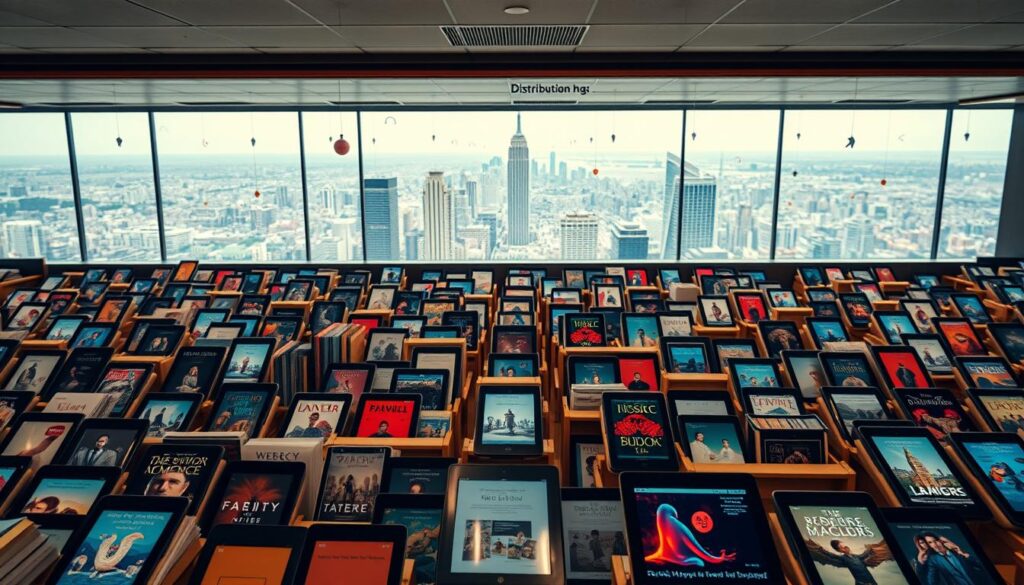
Distribution Channels: Reaching Readers
Authors and publishers need to find the best ways to get their books to readers. The choice of distribution channels can greatly affect a book’s success. Both ebooks and print books have different channels for various reader tastes.
Ebook Distribution Platforms
Ebooks are sold online, changing how we read. Major platforms for ebooks include:
- Amazon Kindle Direct Publishing (KDP)
- Apple Books
- Barnes & Noble Press
- Kobo Writing Life
- Google Play Books
These platforms help authors reach readers worldwide. They offer tools for marketing and tracking sales.
Retailers for Traditional Books
Print books are sold through many retailers, both online and in stores. Key places include:
- Amazon
- Barnes & Noble
- IndieBound (independent bookstores)
- Books-A-Million
- Local bookstores
These retailers make print books available. They also host events like book signings and readings.
To show the differences and similarities in ebook and traditional book distribution, here’s a comparison:
| Distribution Channel | Ebooks | Traditional Books |
|---|---|---|
| Primary Platforms | Amazon KDP, Apple Books, Kobo | Amazon, Barnes & Noble, IndieBound |
| Global Reach | High | Variable, depending on retailer |
| Marketing Tools | Extensive online tools | Limited online tools; more in-store promotions |
In conclusion, knowing the distribution channels for ebooks and print books is key. By using the right platforms and retailers, authors and publishers can increase their book’s visibility and sales.
Author Control: Rights and Royalties
Authors have different levels of control over their work in ebook and traditional publishing. They must think about both the creative and business sides. This includes royalties and managing rights.
Ebook Royalties Explained
Ebook publishing lets authors control their work more, especially with royalties. Amazon Kindle Direct Publishing (KDP) offers up to 70% royalties for ebooks priced between $2.99 and $9.99. This high rate gives authors more financial control.
Ebook royalty rates change based on the platform and book price. Apple’s iBooks Store and Barnes & Noble’s Press also offer good rates. The clear and simple ebook royalty structures help authors understand their earnings better.
Traditional Publishing Contracts
Traditional publishing contracts are more complex and offer lower royalty rates than ebooks. Authors usually get 10% to 15% on print sales and a bit more for ebook sales. The rights management in traditional publishing can be tricky, with contracts covering subsidiary rights like film and audio.
It’s key for authors to understand their traditional publishing contract well. This helps them keep as much control as possible over their work.
To show the difference in royalties between ebook self-publishing and traditional publishing, here’s a comparison:
| Publishing Method | Royalty Rate | Rights Management |
|---|---|---|
| Ebook Self-Publishing | Up to 70% | Author retains most rights |
| Traditional Publishing | 10%-15% | Publisher manages subsidiary rights |
Authors need to consider these points when choosing between ebook and traditional publishing. Ebook publishing offers higher royalties and more control. But traditional publishing provides professional editing and marketing support.
In conclusion, knowing about author control, rights, and royalties is crucial for making good publishing decisions. Whether choosing ebook or traditional publishing, being informed about the financial and legal aspects can greatly affect success.
The Future of Publishing: Trends to Watch
The publishing world is changing fast. Two big trends are leading the way: more people reading ebooks and new ways to print books. For authors and publishers, keeping up with these changes is key to success.
Growth of Ebook Consumption
Ebooks are getting more popular because they’re easy to use and access. Enhanced reading technologies and e-readers make reading digital books a breeze. This trend is likely to keep growing, making ebooks a big part of the market.
Innovations in Traditional Printing
Even as ebooks rise, traditional printing is making a comeback. This is thanks to print-on-demand services and advanced digital printing. These changes make printing books cheaper and more flexible, meeting the demand for physical copies.
Technology is also improving traditional printing. It allows for better quality prints and more efficient production. This opens up new opportunities for publishers to create high-quality books.
Case Studies: Success Stories in Both Mediums
Both ebook and traditional publishing have their own success stories. These stories show the wide range of opportunities for authors. We will look at notable examples in each area, showing success is possible in both.
Notable Ebook Authors
Ebook publishing has opened doors for new authors. Amanda Hocking is a great example. She started by self-publishing her young adult paranormal novels as ebooks. Before getting a traditional deal, she sold over a million copies.
Hugh Howey is another example. His science fiction series “Wool” was self-published as ebooks. This led to mainstream success and caught the eye of traditional publishers.
| Author | Notable Work | Publishing Path |
|---|---|---|
| Amanda Hocking | Young Adult Paranormal Novels | Self-Published Ebooks |
| Hugh Howey | Wool Series | Self-Published Ebooks |
Impactful Traditional Publishing Examples
Traditional publishing offers many benefits, like professional editing and marketing. J.K. Rowling’s “Harry Potter” series is a prime example. It became a global hit through traditional publishing. The series sold millions and was translated into many languages, also becoming a hit in films.
Kristin Hannah’s “The Nightingale” is another example. It became a bestseller through traditional publishing. The historical fiction genre drew in a large audience, showing the appeal of traditionally published books.
| Author | Notable Work | Publishing Path |
|---|---|---|
| J.K. Rowling | Harry Potter Series | Traditional Publishing |
| Kristin Hannah | The Nightingale | Traditional Publishing |
Making the Right Choice for Your Book
Choosing between ebook and traditional printing for your book needs careful thought. You must consider the format, content, budget, and your publishing goals.
Content Considerations
Authors and publishers need to think about their content type. Books with complex layouts or high-quality images might do better in print. On the other hand, text-heavy books could be great as ebooks.
Budget and Goals Alignment
It’s important to balance your budget with your publishing goals. Ebooks are often cheaper to start with, but print can offer more money through certain sales. Knowing this helps you make a choice that fits your needs.
By looking at these points, you can decide on the best format for your book. This choice will help you reach your audience and meet your goals.