

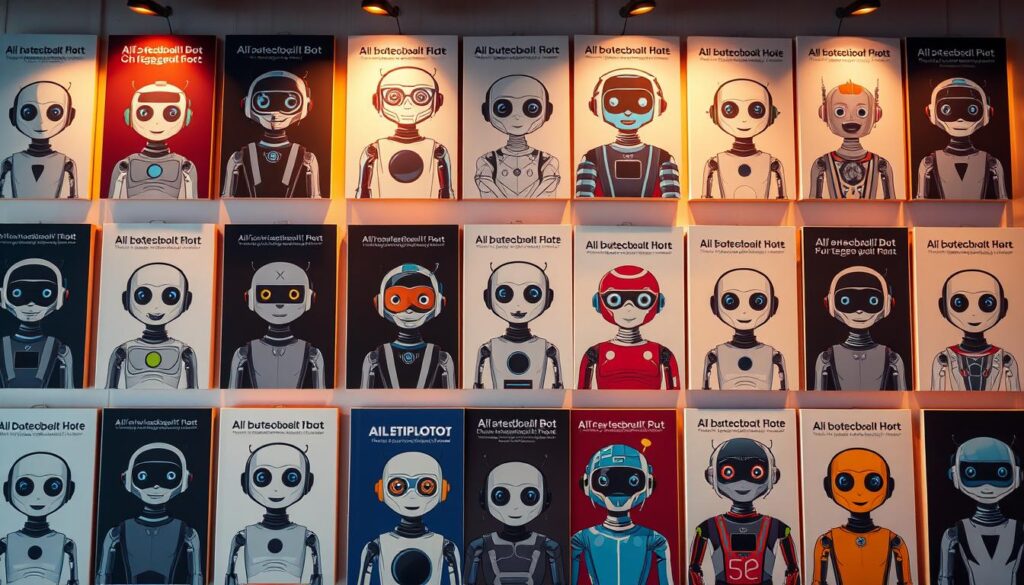
Chatbot eBook Covers – Can artificial intelligence really make ebook designs as good as humans?
The answer is yes, thanks to AI’s ability to create visually stunning covers that catch your eye.
The results show AI’s power in changing ebook design forever.
Introduction to AI-Generated eBook Covers
The use of AI in eBook design is changing how digital covers are made. This new tech is not just altering graphic design. It’s also opening doors for authors and publishers.
Exploring AI-generated eBook covers, we see a trend driven by AI’s growth. Tools like Midjourney are leading this change.
The Rise of AI in Design
AI technology is advancing fast, and it’s now a big part of graphic design. Making digital covers with AI is a natural step. AI can handle complex data and create beautiful images.
AI brings many benefits to design. For example, it can:
- Automate boring tasks, letting designers be more creative.
- Make many design options based on certain rules.
- Study design trends and guess what’s next.
| Design Aspect | Traditional Method | AI-Generated |
|---|---|---|
| Creativity | Dependent on human imagination | Can generate novel combinations based on data |
| Speed | Time-consuming, especially for complex designs | Rapid generation of multiple design options |
| Customization | Limited by human capacity to make changes | Can easily modify designs based on feedback |
What Makes AI-Generated Covers Unique?
AI-generated eBook covers are special because of their unique traits. They look great and are made for specific readers.
The uniqueness of AI covers comes from AI’s ability to analyze lots of data. This lets AI tools make designs that are fresh and hit the mark with the audience.
As the publishing world keeps changing, AI’s role in eBook design will grow. Knowing what AI can do is key for authors and publishers wanting to use this tech.
Understanding Chatbots in Publishing
Chatbots are changing online publishing and book marketing. They are making it easier for authors and publishers to talk to their audience.
Chatbots are more than just a trend. They are key to the publishing world. They help publishers engage readers, give personalized book tips, and make marketing easier.
How Chatbots Are Changing the Industry
Chatbots are making big changes in publishing. They give authors a new way to reach readers, share news, and promote books. For example, chatbots can:
- Give book tips that match what readers like
- Let authors talk directly to readers
- Share special content or deals with loyal readers
Using chatbots, publishers can keep up with trends and find new ways to connect with readers.
Key Benefits of Using Chatbots
Chatbots bring many benefits to publishing. Some main advantages are:
- Enhanced Reader Engagement: Chatbots make communication with readers interactive and personal.
- Targeted Marketing: Chatbots help publishers focus their marketing by analyzing how readers interact.
- Increased Efficiency: Chatbots automate tasks, freeing up time for more important work.
As publishing keeps evolving, chatbots will play an even bigger role. They will open up new chances for creativity and growth.
The Role of AI in Graphic Design
Graphic design has changed a lot with AI. This change is especially true for making eBook covers. AI helps designers make great covers fast and efficiently.
Advancements in AI Technology
AI has made big changes in graphic design. Machine learning algorithms can look at lots of design data. They learn and make designs that people like and fit what they want.
AI tools are getting better. They can do boring tasks for designers. This lets designers focus on being creative. This mix of human creativity and AI’s smarts is changing design.
Comparison of Traditional vs. AI Design Methods
Old ways of designing use human ideas and experience. These are good but can take a lot of time. AI designs use data and algorithms to make new and interesting designs.
| Design Aspect | Traditional Method | AI-Driven Method |
|---|---|---|
| Creativity | Human intuition and experience | Algorithmic generation and data analysis |
| Time Efficiency | Time-consuming, manual process | Automated, rapid design generation |
| Personalization | Limited by designer’s knowledge and experience | Highly personalized based on data analysis |
The table shows AI is better for saving time and making designs personal. But, human designers bring something special. The best results come from using both old and new ways.
The future of graphic design, especially for eBook covers, will keep getting better with AI. As designers and AI work together, we’ll see even more cool digital covers.
Characteristics of Effective eBook Covers
In the world of digital publishing, a great eBook cover is key. It must capture the book’s essence and appeal to its audience. This is vital for the eBook’s success.
Visual Appeal and Branding
An eBook cover’s visual appeal is crucial for catching readers’ eyes. It’s not just about looking good; it must also show the book’s genre and tone. Branding is important too, as it helps authors or publishers stand out.
Using certain colors or fonts can make an author’s work easily recognized. This makes their books stand out on digital shelves.

Importance of Typography and Imagery
Typography and imagery are key in eBook cover design. The right font can make the cover both readable and attractive. Images can also boost the cover’s appeal and show what the eBook is about.
| Design Element | Impact on eBook Cover | Best Practices |
|---|---|---|
| Typography | Readability and aesthetic appeal | Choose fonts that are clear and relevant to the genre |
| Imagery | Visual appeal and thematic representation | Use high-quality images that resonate with the target audience |
| Color Scheme | Emotional impact and branding | Select colors that evoke the desired emotional response and align with the brand |
Authors and publishers can make eBook covers that draw in readers and show what the book is about. This is done by carefully picking typography, imagery, and colors.
Exploring AI Tools for eBook Cover Design
The world of eBook cover design is changing fast with AI. Authors and publishers are now using AI tools to make eye-catching eBook covers. These tools make designing easier and open up new creative options.
Popular AI Design Software Options
Many AI design tools are popular today. Midjourney is one that’s making a big splash. It combines creativity with technical skill to make great eBook covers. Adobe Fresco and Prisma also use AI to improve design.
When picking an AI design tool, think about what you need. Some tools are better at certain things, like text or images.
| AI Design Tool | Key Features | User Interface |
|---|---|---|
| Midjourney | Advanced AI algorithms for creative designs | User-friendly interface |
| Adobe Fresco | Vector and raster brushes for versatile design | Intuitive and customizable |
| Prisma | AI-powered artistic filters for unique effects | Simple and easy to navigate |
How to Choose the Right Tool for Your Needs
Choosing the right AI tool depends on several things. Your design experience, what you want to achieve, and specific needs like genre or style are key. It’s important to try out different tools and read what others say about them.
Think about how much you want to customize, the quality of the output, and how easy it is to use. By considering these, you can find an AI design tool that fits your needs and improves your eBook cover design.
Case Studies: Successful eBook Covers
The rise of AI in eBook design has brought new ideas to the publishing world. Now, authors and publishers can make high-quality digital covers that grab readers’ attention.
Analysis of Effective AI-Generated Covers
Many case studies show how AI covers can boost sales. For example, a romance novel’s AI cover matched the genre perfectly, leading to more sales. The AI picked the right colors and fonts to attract the right readers.
A science fiction eBook also saw success with an AI cover. The AI tool studied what readers like, creating a cover that stood out. This led to more people reading the eBook.
Lessons Learned from the Market
Looking at these successes, we learn a lot about good eBook covers. The main points are:
- It’s key to match the cover with the book’s genre
- Knowing what your audience likes is crucial
- AI can make design choices that really work
Using these tips, authors and publishers can do better in book marketing. As the publishing world changes, AI in cover design will become even more important.
Tips for Designing Your Own Chatbot eBook Covers
Making a great chatbot eBook cover means knowing about digital design and AI. The publishing world is using more AI, so there’s a big need for designers who can make eye-catching covers.
Essential Design Principles
When making chatbot eBook covers, keep these key points in mind. They help make sure your cover looks good and works well:
- Know who your audience is and design for them.
- Choose colors that match the eBook’s style and mood.
- Use fonts that are easy to read and fit the book’s theme.
- Add images or graphics that make the cover pop and show what the book is about.
By following these essential design principles, you can make chatbot eBook covers that really grab people’s attention in a busy digital world.
Common Pitfalls to Avoid
Designing chatbot eBook covers with AI can be very good, but watch out for these common mistakes:
- Don’t just rely on AI; add your own touch to make it special.
- Don’t forget about branding and keeping your covers consistent.
- Always test your design with your target audience to make sure it connects with them.
Knowing these common mistakes helps designers avoid them. This way, they can make chatbot eBook covers that are not only beautiful but also grab the reader’s interest.
Incorporating Chatbots into Your Marketing Strategy
Chatbots are changing how we read online, making it more fun and personal. As the world of publishing grows, authors and publishers are seeking new ways to connect with their audience. They want to promote their work in exciting ways.
Chatbots let readers talk directly to publishers, creating a deeper experience. By adding chatbots to their marketing, publishers can keep readers interested, build loyalty, and boost sales.
Engaging Readers with Interactive Features
Chatbots are great for making reading more interactive. They can give personalized book tips, special content, and even help start discussions with authors.
- Personalized Recommendations: Chatbots can suggest books or authors based on what readers like.
- Exclusive Content: Publishers can share special content, like extra chapters, with loyal readers through chatbots.
- Author Interactions: Chatbots can help set up Q&A sessions or discussions between authors and readers, creating a community feel.
Enhancing User Experience through Chatbots
Chatbots make reading better by offering quick help and advice. They can guide readers through eBooks or answer questions about publishing platforms, making things easier.
| Feature | Benefit | Example |
|---|---|---|
| Instant Support | Improved Reader Satisfaction | Quick answers to common questions |
| Personalized Guidance | Enhanced User Experience | Customized eBook recommendations |
| Interactive Content | Increased Engagement | Interactive quizzes or games within the eBook |
By using these features, publishers can make reading more fun and personal. This can lead to more loyal readers and higher sales.
The Future of AI in Publishing
AI technology is growing fast, changing the publishing world a lot. It will change how eBooks are made, marketed, and read.
Emerging Trends to Watch
Several new trends will shape AI in publishing. AI will help make eBook covers and layouts look great. It will also improve book marketing with chatbots and personalized suggestions.
- AI-generated content
- Personalized reader experiences
- Advanced analytics for market trends
These trends mean publishing will become more automated and personal. As AI gets better, we’ll see even more advanced uses in publishing.
| Trend | Description | Potential Impact |
|---|---|---|
| AI-generated Content | Automated creation of content using AI algorithms | Increased efficiency in content creation |
| Personalized Reader Experiences | Use of AI to offer tailored recommendations | Enhanced reader engagement and satisfaction |
| Advanced Analytics | AI-driven analysis of market trends and reader behavior | Better decision-making for publishers and authors |
Potential Challenges Ahead
There are challenges with more AI in publishing. One big worry is jobs might be lost to automation. There’s also concern about content becoming too similar and AI work lacking human touch.
The key will be to strike a balance between leveraging AI for its benefits while preserving the creative essence of human involvement.
As the industry moves forward, tackling these challenges is key. This way, publishers and authors can use AI to improve their work. They can keep the special qualities that make their content valuable to readers.
Understanding the Audience for Chatbot eBooks
To make chatbot eBooks successful, knowing your audience well is key. This knowledge shapes the eBook’s design and content. It also helps in marketing to find the right readers.
Identifying Target Demographics
Figuring out who your audience is means looking at age, gender, interests, and how they read. You can get this info from market research, surveys, and analytics tools.
For example, knowing your audience’s age helps you make the content and design more appealing. Also, understanding their reading habits helps decide the eBook’s length and format.
| Demographic Factor | Importance in eBook Design | Example |
|---|---|---|
| Age | Helps in tailoring content and design | Using youthful graphics for a younger audience |
| Interests | Guides the topic and tone of the eBook | Focusing on fiction for readers who prefer stories |
| Reading Habits | Informs the length and format | Creating concise eBooks for busy professionals |
Gathering Feedback from Readers
Getting feedback is vital to see how your chatbot eBook is doing. You can get this through reviews, surveys, and talking directly to readers.
Feedback tells you what’s working and what’s not. This helps improve your future eBook designs and marketing plans.
By knowing your audience and using their feedback, you can make chatbot eBooks that really connect with readers.
The Process of Creating a Chatbot eBook Cover
Creating a chatbot eBook cover is a detailed process. It combines idea development with the use of AI tools for design. This approach makes the cover visually appealing and connects with the audience.
Concept Development and Planning
The first step is to develop and plan the cover’s concept. This involves knowing the eBook’s genre, who it’s for, and what message it should send. It’s important to come up with ideas that reflect the eBook’s essence and stand out.
During this phase, consider the following:
- What makes the eBook special?
- What are the current design trends in the genre?
- How can the cover match the eBook’s content and appeal to its audience?
Finalizing the Design with AI Tools
After the concept is set, it’s time to use AI tools for design. These tools help with everything from color palettes to automating tasks.
AI in graphic design offers:
- Quick changes and improvements to designs
- Adding complex elements that are hard to do by hand
- Creating unique design ideas based on input
By mixing careful planning with AI tools, designers can make covers that are both beautiful and grab attention.
The publishing world is changing, and AI in design is becoming more important. Knowing how to create a chatbot eBook cover is key for authors and publishers to succeed online.
Conclusion: The Impact of AI on the eBook Landscape
Artificial intelligence has changed the eBook world, bringing new chances for growth and creativity. AI-made eBook covers are not just beautiful. They also capture the story’s heart in a way that grabs readers.
Key Benefits and Future Prospects
AI in eBook design brings many advantages. It makes books look better, helps with branding, and keeps readers interested. As AI gets better, we’ll see even more amazing tools for making eBooks and marketing books online.
Embracing the Future
AI is set to become even more important in eBook design and online publishing. By using this tech, creators can explore new ideas, work more efficiently, and reach their audience better.






One Comment